A room is never neutral. It either works for you or against you, and most home offices work against their owners from the moment the first flat-pack box hits the floor.
The instinct to treat a workspace as purely functional — four walls, a desk, a chair — misses the actual mechanics of concentration. Environment is not decoration. It is an input, and like any input, sloppy versions produce sloppy output. Cognitive performance responds measurably to light, color, and spatial order. Treat those variables with the same rigor you would bring to any decision that matters, and the room starts pulling its weight instead of draining it.
Function Is Not the Enemy of Beauty
There is a persistent myth that form follows function, full stop — that a serious workspace has to look austere to prove it is serious. It does not. A beige room under fluorescent light is not more productive for being ugly; it is just a slow drain on the will to show up. Beauty and output are not in tension. They are the same project, viewed from different angles.
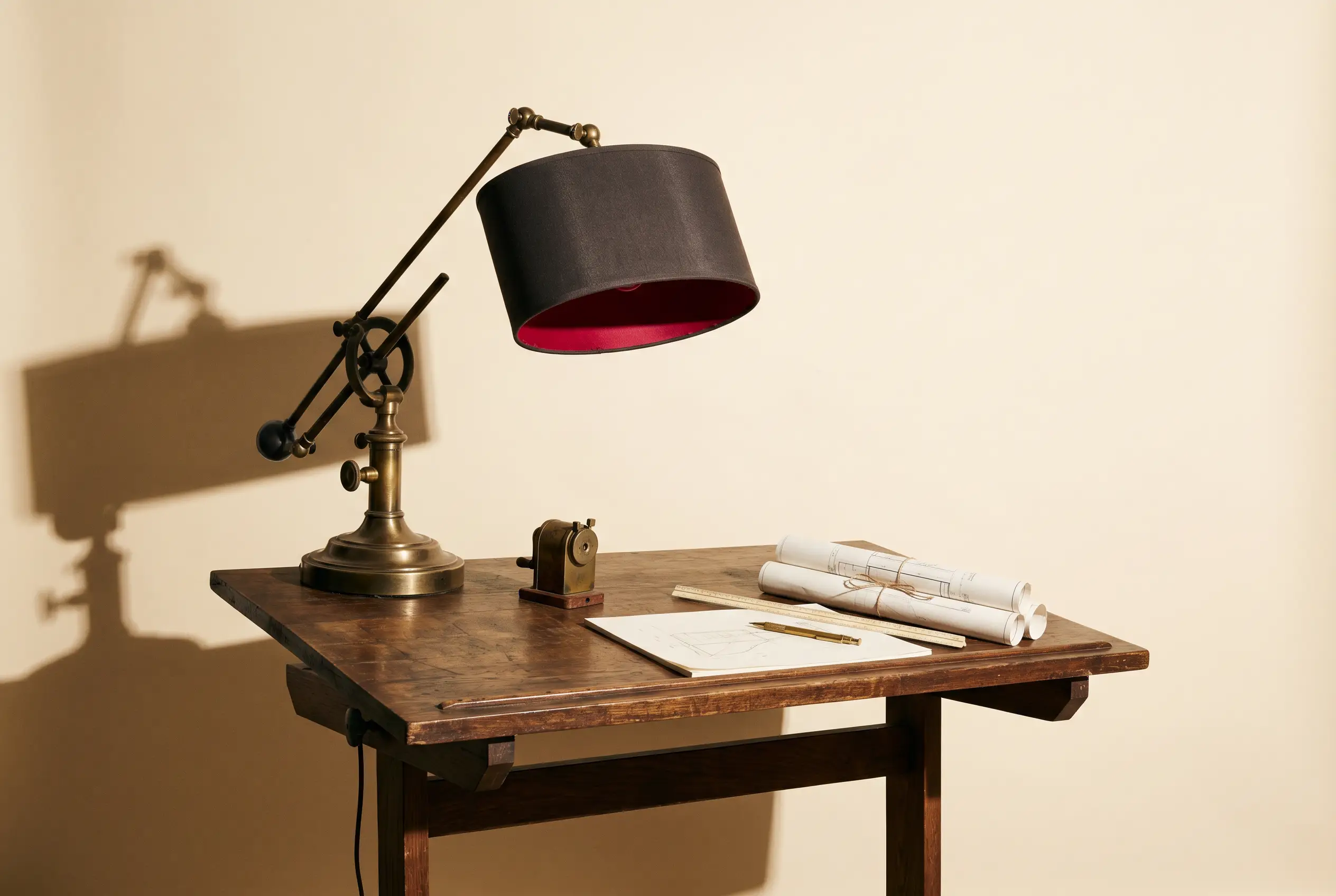
Start with orientation and light. East-facing rooms catch morning light at an angle that makes the whole space feel deliberate rather than default. Choose a wall color that recedes rather than announces itself — warm white over stark white, clean over cold. Invest in one substantial piece of furniture that signals permanence: a solid desk, well-built, meant to last. A room that looks temporary invites you to treat the work in it as temporary too.
A space that asks nothing of you asks nothing of your work. Design the room to demand your best, and your best shows up more often.
None of this requires an unlimited budget. It requires deciding, early, that the room where you think deserves the same intention as the thinking itself.
The Architecture of Concentration
Deep work does not happen by accident — it happens by design, and the design is spatial before it is mental. The most common failure in home office setups is letting the room's purpose blur into the rest of the house's entropy. A functioning office should not read as a slightly tidier corner of the living room. It should feel like a different register of being, one your body recognizes the moment you walk in.
Four non-negotiables build that architecture:
- One screen. A single monitor at eye level, with nothing on the desk that does not belong to the current project. Visual clutter is cognitive clutter — clear one, and you clear the other.
- Sound control. Acoustic panels can double as wall art. A quiet room should feel chosen, not accidental — silence as a design decision, not an absence.
- Separate the thinking chair from the producing desk. A reading chair positioned away from the desk keeps reflection and output in distinct modes instead of blurring into the same low-grade multitasking.
- Kill the overhead lighting during work hours. Two warm-toned lamps, one on each side of the desk, change the quality of light and, with it, the quality of thought.
Temperature matters too, though preferences vary — some people concentrate best in a slightly cool room, others need warmth. Test it deliberately instead of inheriting whatever the thermostat happens to be set to.
Beauty as a Design Requirement, Not an Indulgence
Here is what rarely gets said about workspaces: you are allowed to make them beautiful, and you do not need to earn that permission with productivity metrics. Credentials do not grant the right to a beautiful office. Occupying the room for eight hours a day does.
One well-chosen piece of art, positioned where you will actually look up and see it, does more for morale than an extra shelf of reference books. It does not need to be expensive to work — it needs to be something that gives you a small hit of pleasure on the fortieth glance, not just the first.
That pleasure is not frivolous. It is fuel. Work done in a well-designed room tends to get taken more seriously, by the person doing it first and by everyone else second. Build the space to know that, and the space will keep asking you to meet it.