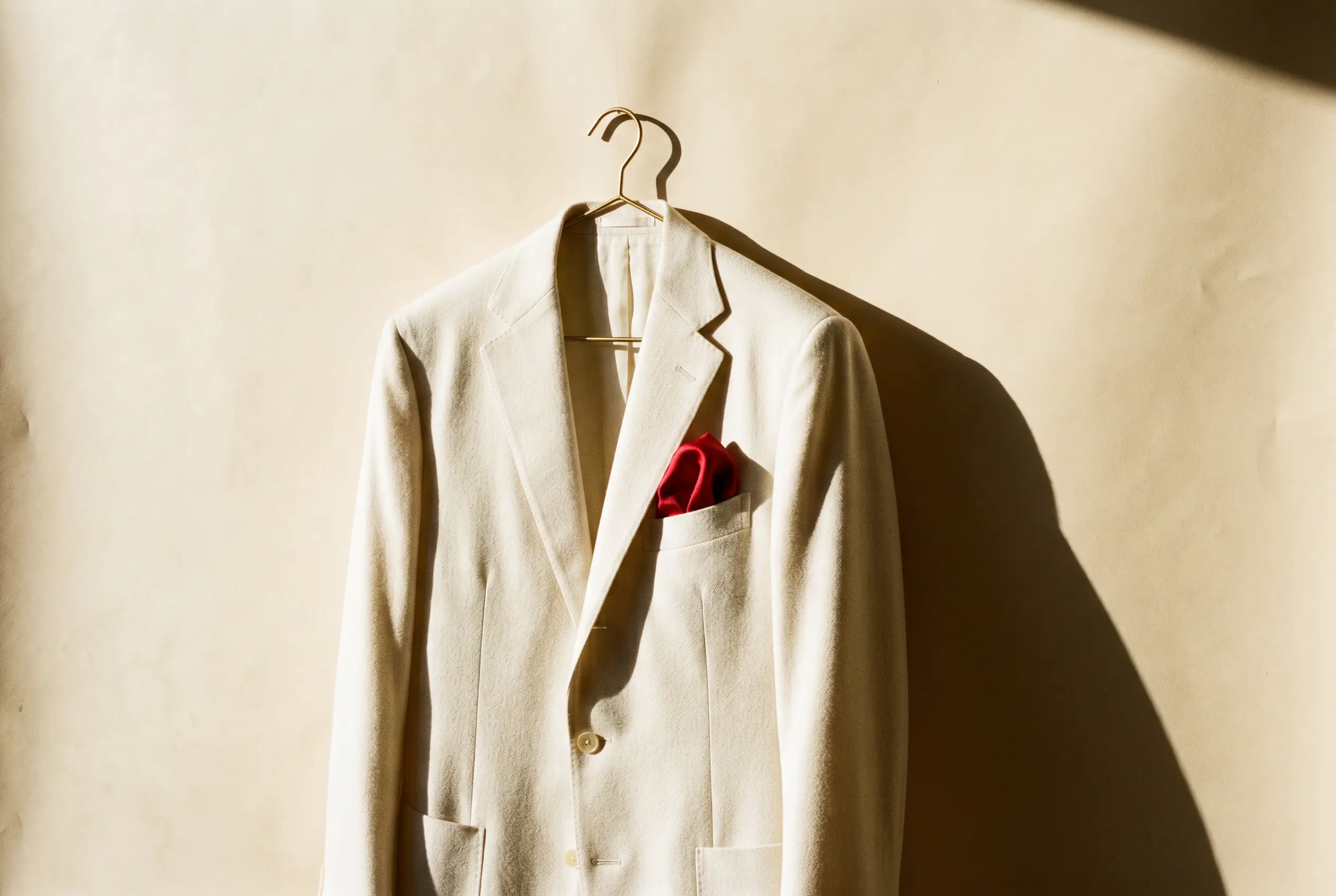
What you wear walks into the room a half-second before you do, and it has already started making arguments on your behalf.
Clothing is read before a single word is spoken. That is not vanity — it is a documented feature of how people process an unfamiliar person: fast, pattern-seeking, provisional, and largely involuntary. Power dressing has always understood this, even in decades when the phrase itself sounded dated. The shoulder pads and pinstripes of past eras were blunt instruments. The current version is subtler, but the underlying mechanism hasn't changed: clothing sends a signal, and a signal you don't consciously choose will still be received, interpreted, and acted on by everyone around you.
The useful question is never "should I care about this." You already do, whether you admit it or not. The useful question is what you want the signal to say, and whether your current wardrobe is actually saying it.
Fit Beats Price, Every Time
Fast fashion solved the problem of access decades ago. It did not solve the problem of fit, and fit is where most "expensive-looking" outfits actually earn that description. A department-store blazer tailored to the shoulder reads as more deliberate — and more expensive — than a designer piece bought a size off and left as-is. Tailoring is the cheapest form of authority available to anyone, and it is the most consistently skipped.
I'd argue this is the single highest-leverage move in a working wardrobe: two or three tailoring appointments will do more for how you're perceived in a negotiation than an entire new season of purchases. The math is unglamorous and extremely reliable.
Color Is a Decision, Not a Default
Most people dress in whatever color arrived clean at the top of the drawer that morning. That's a default, not a decision, and rooms can tell the difference. Deep, saturated color — a true navy, an oxblood, a forest green — reads as intention in a way that safe neutrals rarely do. Neutrals aren't wrong; they're a legitimate choice for blending into a room where you want information, not attention. But choose the neutral. Don't default into it.
Dressing with intention isn't about impressing anyone. It's about refusing to be misread.
The same logic applies in reverse. Walking into a high-stakes meeting in the loudest color in your closet because it happened to be next in rotation is its own kind of accident — just a louder one. Intention means the color matches the argument you're trying to make, not the mood you woke up in.
Comfort and Authority Are Not Competing Priorities
There's a persistent myth that power dressing requires discomfort — the tight waistband, the shoes that punish you by hour three, the fabric that doesn't breathe. This is backward. Discomfort is a tax on presence. A pinched waistband or a slipping heel pulls a measurable slice of attention away from the room and onto your own body, and everyone can tell when that's happening even if they can't name it. The most commanding people in any meeting are rarely the most uncomfortable ones.
The wardrobe that actually functions as armor is built from pieces that disappear the moment you put them on — good fabric, correct fit, nothing that needs to be managed or adjusted mid-conversation. Comfort, done properly, isn't the opposite of power dressing. It's a precondition for it.
A few operating principles worth building a wardrobe around:
- Fit matters more than price. A well-fitted garment from any budget reads as self-possession.
- Color is a decision, not an accident. Choose the color that serves the room you're walking into, or the room you're trying to create.
- Comfort and authority aren't opposites. Discomfort is distraction, and distraction is a tax on your presence.
- Repetition builds recognition. A signature look isn't a limitation — it's a promise kept consistently over time.
The Signature Is the Strategy
That last point deserves its own emphasis, because it's the one people resist most. A recognizable, repeated silhouette — the same collar shape, the same palette, the same three go-to pieces in rotation — isn't a failure of creativity. It's a brand decision, and brands work precisely because they're consistent rather than novel. The people whose style you remember most clearly are rarely the ones who reinvent themselves every week. They're the ones who found the signal that worked and kept sending it, deliberately, until the room learned to read it correctly without having to think.
Dressing with intention doesn't require a bigger budget or more time. It requires deciding, before you walk into any room, exactly what you want your clothes to say — and then actually saying it.