Copper peptide serums are having a moment: sky-blue bottles, TikTok collagen claims, and a nickname that somebody, somewhere, decided to call the "Barbie peptide." Before you drop forty dollars on an eyedropper of tinted liquid, it is worth asking what GHK-Cu actually is, what the research supports, and whether that nickname survives five minutes of scrutiny.
What is GHK-Cu?
GHK-Cu is short for glycyl-histidyl-lysine copper, a tripeptide (three amino acids bonded together) attached to a copper ion. It is not a synthetic invention dreamed up by a skincare brand. GHK-Cu occurs naturally in human plasma, saliva, and urine, and researchers first isolated it from human blood in the 1970s while studying why older liver tissue regenerated differently than younger tissue. The amount of it in your body declines with age, which is the biological hook every copper peptide marketing deck leads with.
In skincare, GHK-Cu shows up as an ingredient in serums, creams, and occasionally hair or scalp products, usually in concentrations brands rarely disclose in a way you can actually compare across products. That last part matters more than the marketing wants it to.
The compound moved from medical research into cosmetics gradually. It is regulated in the United States as a cosmetic ingredient, not a drug, which means products containing it are not required to prove efficacy claims the way a prescription treatment would be. That distinction is not a knock on the ingredient itself, but it explains why a product can legally print "clinically studied" on the label while the actual formula on the shelf was never the one tested in the study being cited.
Where does "Barbie peptide" actually come from?
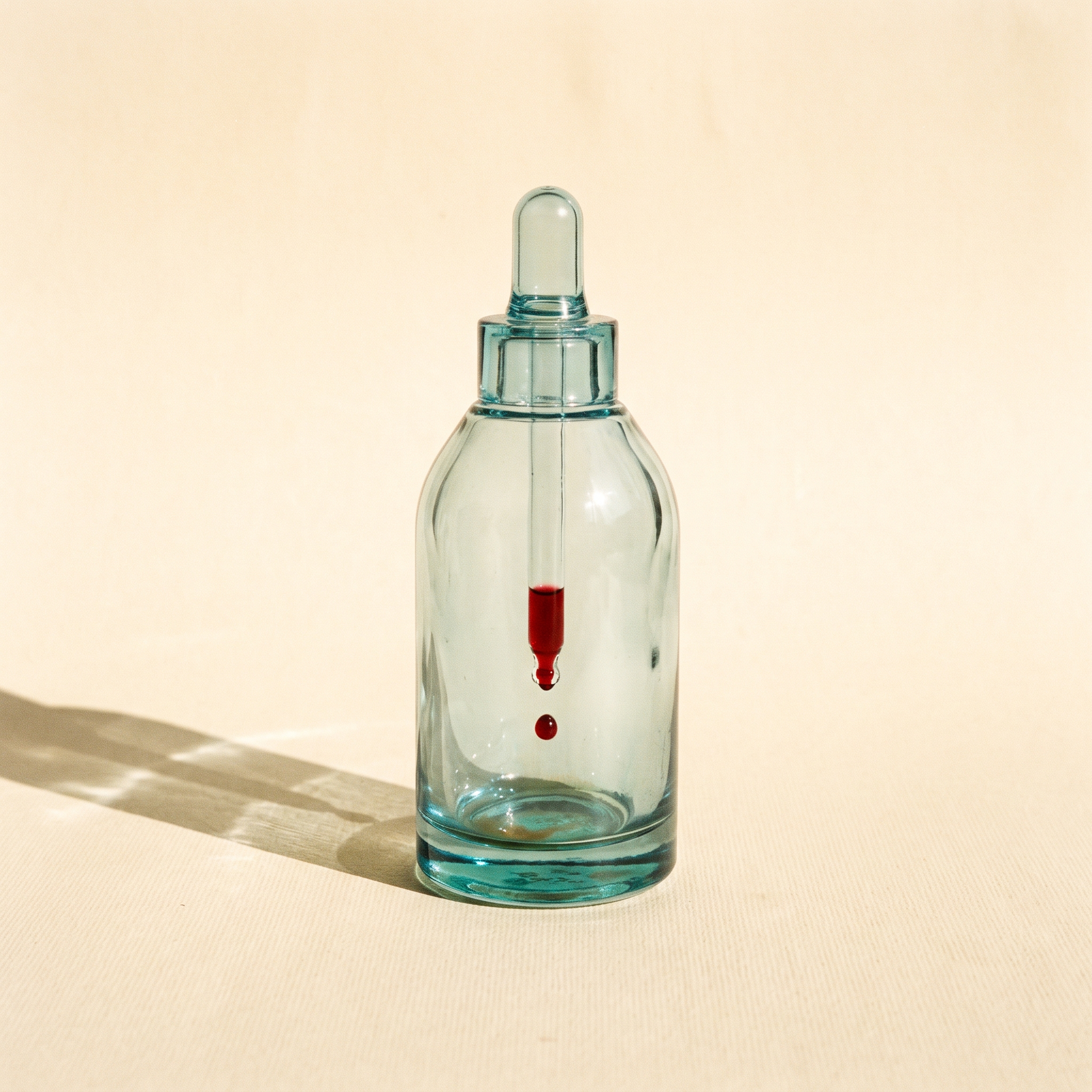
Here is the honest answer: there is no dermatology journal, brand history, or credible press origin story for "Barbie peptide" that turned up in research for this piece. What is real is the color. Copper ions give GHK-Cu formulas a distinct blue or blue-green tint, not pink, which makes the nickname a little wobbly on its face if you are picturing Barbie-pink. The name reads more like internet shorthand, the kind of label that spreads through comment sections and TikTok captions because it is catchy and vaguely feminine-coded, not because it describes the product accurately.
None of that makes the ingredient less legitimate. It just means the nickname is marketing texture, not information. If a product page or influencer leans hard on the "Barbie peptide" framing instead of talking about concentration, formulation, or actual studies, treat that as a signal about the seller's priorities, not the ingredient's merit.
What does the actual research support?
This is where GHK-Cu earns more credit than most trending peptides. It has one of the longer, more established research histories in the copper-peptide category, largely because it started as a wound-healing compound, not a cosmetic one. Laboratory and clinical research has repeatedly shown that GHK-Cu:
- Stimulates production of collagen, elastin, and glycosaminoglycans, the structural and cushioning components of skin
- Accelerates wound closure in both animal models and some human studies, which is the original reason it drew scientific attention
- Acts as a signaling molecule with anti-inflammatory and antioxidant properties, rather than simply sitting on the skin as a moisturizing agent
One frequently cited human trial compared topical GHK-Cu against vitamin C and retinoic acid and found GHK-Cu produced measurable collagen increases in roughly seventy percent of participants, outperforming both comparators on that specific measure. A more recent randomized controlled trial, published in 2024, tested a 0.1 percent GHK-Cu cream on sixty women between forty and sixty-five over twelve weeks and reported meaningful improvements in wrinkle depth, elasticity, and collagen density on ultrasound imaging, compared to a placebo group.
The honest read on the data: GHK-Cu has more legitimate science behind it than most of what trends on your For You page, and it is still nowhere near the slam-dunk the marketing implies.
The caveats matter as much as the results. Many of the strongest studies are small, industry-funded, or run over relatively short windows. A single twelve-week trial on sixty people is a real data point, not proof of a lasting anti-aging effect. Independent, large-scale, long-term human trials on cosmetic-grade GHK-Cu are still thin on the ground.
Where the marketing gets ahead of the science
The gap between "GHK-Cu has documented biological activity" and "this fourteen-dollar serum will visibly rebuild your face" is where most copper peptide marketing lives. A few specific inflations worth flagging:
"Rebuilds collagen at a cellular level" is a real mechanism dressed up as a guarantee. Stimulating collagen synthesis in a lab dish or a clinical trial under controlled conditions is not the same as promising visible results from a drugstore serum used inconsistently at home.
Concentration claims are frequently meaningless. Because most brands will not state the actual percentage of active GHK-Cu, "contains copper peptides" tells you almost nothing about whether the formula matches what was used in the studies that make the ingredient sound impressive in the first place.
Wound healing evidence gets stretched into anti-aging evidence more than the underlying science supports. GHK-Cu's strongest, most consistent data comes from tissue repair and wound contexts, not from cosmetic anti-aging use in healthy, intact skin over years of use.
What are the formulation gotchas?
If you decide to try it, the ingredient interactions matter more than most product pages let on. GHK-Cu is sensitive to pH, and copper ions oxidize when exposed to light and air, which is why it typically ships in opaque or airless packaging rather than clear glass droppers left open to sunlight on a bathroom counter.
The most commonly cited conflict is with vitamin C, specifically L-ascorbic acid. Its low pH can destabilize the copper peptide complex, so most formulators recommend separating the two: vitamin C in the morning, copper peptide at night, or at minimum a thirty-minute gap between applications rather than layering them back to back. There is no strong clinical evidence that occasional overlap ruins either ingredient, but there is enough chemistry concern that treating them as an AM and PM split, rather than a stacked routine, is the more defensible approach.
Retinol pairs more comfortably with GHK-Cu than vitamin C does, according to formulators who have studied the combination, provided you introduce retinol gradually (two or three nights a week to start) and give the two products some space rather than applying them simultaneously. Copper peptides and retinoids are both fragile compounds in their own right, so stability and storage matter as much as sequencing.
Is GHK-Cu actually worth it?
The ingredient has a real, unusually well-documented biological basis, which is more than can be said for most things trending in skincare aisles right now. That is a legitimate point in its favor. What it is not is a proven substitute for retinoids, sunscreen, or in-office treatments, and the leap from "stimulates collagen synthesis in studies" to "will visibly transform your skin" is doing a lot of unearned work in most product marketing.
If you are curious, a well-formulated, opaque-packaged product used consistently and kept separate from your vitamin C step is a reasonable, low-risk addition to an existing routine that already includes the things with the strongest evidence behind them. Treating it as the headline ingredient of your entire routine, on the strength of a nickname and a blue tint, is where the hype outruns what the research can currently back up.
Worth flagging before you buy: copper peptides can be irritating at higher concentrations, particularly for people with sensitive or reactive skin, and as with any new active the safer approach is patch testing before adding it to a full routine. Price is worth weighing too. Copper peptide serums span a wide range, and a higher price tag is not a reliable signal of a higher, disclosed concentration. Reading the actual ingredient list and looking for brands willing to state a percentage will tell you more than the marketing copy above it ever will.
As for "Barbie peptide" itself: cute, catchy, not accurate, and worth ignoring as a reason to buy anything.