Sheet-pan gnocchi is having a moment for a reason that has nothing to do with algorithms and everything to do with a dumb, obvious fact most home cooks ignore: gnocchi crisps beautifully in a hot oven, and almost nobody sets the oven hot enough or leaves the gnocchi alone long enough to let it happen.
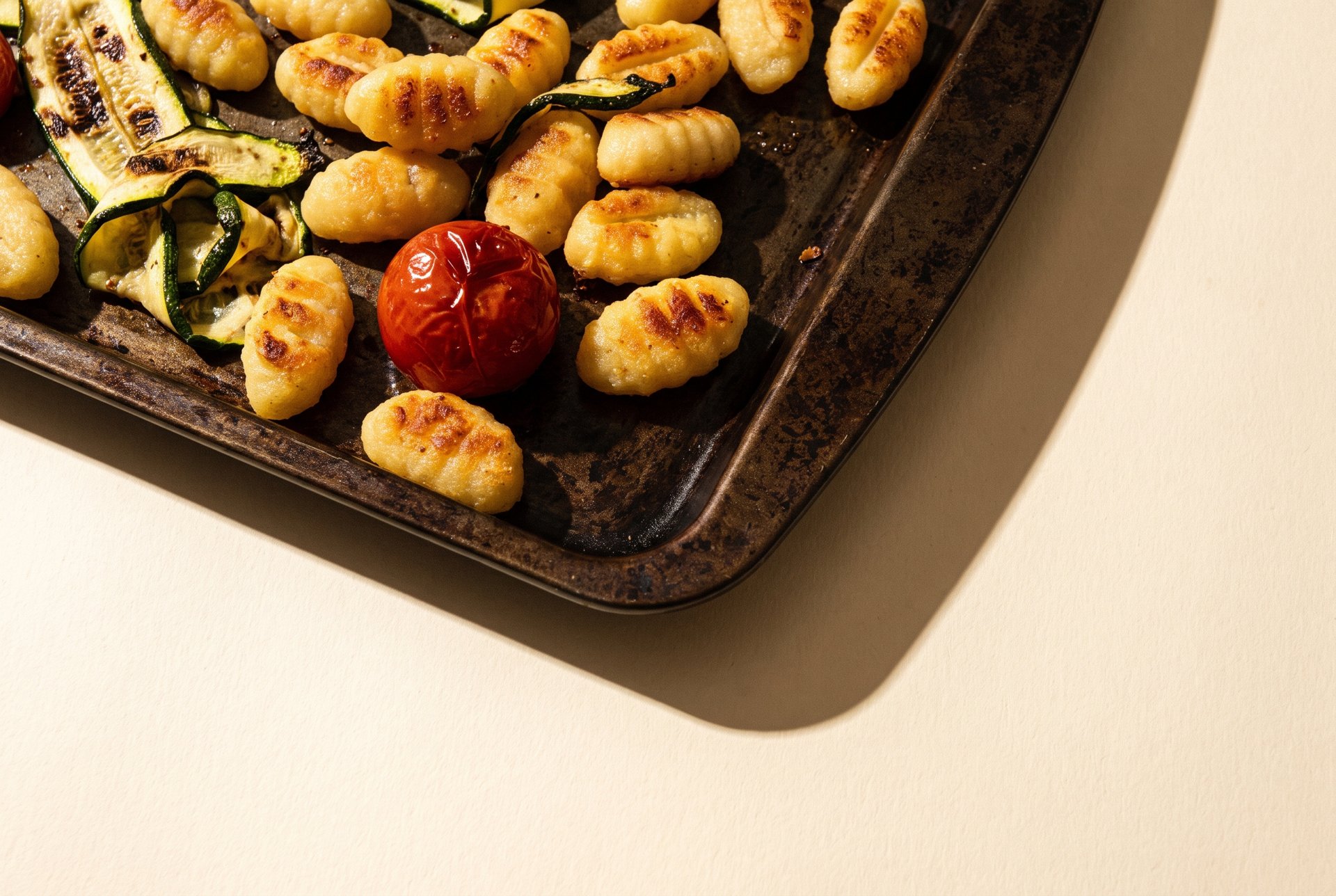
The dish itself is not complicated. Toss shelf-stable potato gnocchi with olive oil, scatter it across a rimmed sheet pan with cherry tomatoes, zucchini coins, and corn, roast at 425 to 450 degrees for 20 to 30 minutes, and finish with parmesan and basil. What separates a version that tastes like a restaurant plate from one that tastes like a sad casserole comes down to two decisions made before anything goes in the oven: which gnocchi you buy, and how much you crowd the pan.
Buy the Bag From the Pasta Aisle, Not the Fridge Case
Refrigerated gnocchi, the kind sold in the deli case in a soft plastic tub, is made to be boiled. It is hydrated, tender, and structurally weak, which is exactly what you want for a pillow of gnocchi in brown butter and sage. It is the wrong thing for a sheet pan. Under dry, high heat it collapses before it browns, releasing steam instead of forming a crust.
Shelf-stable, vacuum-sealed gnocchi, the kind that lives unrefrigerated on a regular grocery shelf, is denser and lower in moisture. That density is the whole trick. It holds its shape under 425-degree heat long enough for the exterior starch to dry out and brown, giving you a shell that is genuinely crisp, not just warm. If a sheet-pan gnocchi recipe has ever disappointed you, check which bag you started with before you blame the oven.
The Physics of a Crisp Crust Is Just Contact and Space
Crisping is a surface phenomenon. It only happens where the gnocchi is touching hot metal directly, uninterrupted by other gnocchi, vegetables, or its own steam. That means three non-negotiables:
- Preheat the pan, not just the oven. Sliding gnocchi onto a sheet pan that has already been heating at 425°F for ten minutes gives you an instant sear the moment it hits metal, the same logic as a preheated cast-iron skillet.
- One layer, no double-stacking. A crowded pan traps steam under a canopy of its own vegetables and gnocchi, which is precisely how you end up with the soft, gummy version nobody wants. Use two pans before you pile gnocchi on top of itself.
- Toss once, not constantly. Stir gnocchi around too often and you scrape off the crust that's forming before it sets. One flip at the halfway mark, around the 12 to 15 minute point in a 25-minute bake, is enough.
Coat everything in oil before it goes in, not partway through. A thin, even film of olive oil is what conducts heat evenly across the gnocchi's surface and keeps it from sticking to the pan mid-crisp, which would tear the crust off when you finally do toss it.
The Vegetables Are the Sauce, Not a Garnish
This is the part of the trend that separates a good version from an unremarkable one. Cherry tomatoes are not on the pan for color. As they roast, their skins split, their juices reduce, and they collapse into a loose, sweet-acidic pool that coats the gnocchi the way a proper pan sauce would, without a single dirty saucepan. That is the entire mechanism behind why this dish tastes finished rather than assembled.
Zucchini and corn need to be cut for the timeline, not for looks. Zucchini in thick half-moons holds its structure through a 25-minute roast without turning to mush; sliced thin, it will disintegrate before the gnocchi crisps. Corn cut straight off the cob adds bursts of sweetness that play against the acidity of the tomatoes, and it needs no head start, it goes on the pan at the same time as everything else.
The finishing move is where people either commit or chicken out, and I would argue this is the only garnish decision on this entire dish that actually matters: torn basil and shaved parmesan added off the heat, at the table, not five minutes before it comes out of the oven. Basil added too early just wilts into a dull green smear and loses every bit of the brightness you cooked forty minutes to earn.
Variations worth taking seriously rather than dismissing as gimmicks: a spoonful of pesto tossed with the gnocchi before roasting, which caramelizes slightly and deepens rather than dilutes; crumbled feta added in the last five minutes so it softens without fully melting; a drizzle of hot honey at the end for a sweet-heat contrast against the acidic tomatoes. Burrata torn over the top the moment the pan comes out of the oven, so the residual heat just barely warms it, turns the whole thing into something that reads as a composed dish rather than a weeknight dump-and-bake.
Why This Earns the Hype and Most One-Pan Recipes Don't
Most sheet-pan dinners promise easy and deliver bland, because a single roasting temperature rarely suits everything piled onto the pan at once. Sheet-pan gnocchi avoids that trap structurally: the gnocchi wants exactly the same high, dry heat that makes cherry tomatoes burst and zucchini caramelize at the edges. Nothing on the pan is fighting the others for oven conditions, which is the real, unglamorous reason this combination works as well as it does. It is not a trick. It is matched cooking temperatures, a properly dense starting ingredient, and the discipline to leave a pan alone for twelve minutes at a stretch.
Serves four as a full dinner in about thirty-five minutes total, most of it hands-off. One pan, one washing-up job, and a result that tastes considerably more expensive than it is.