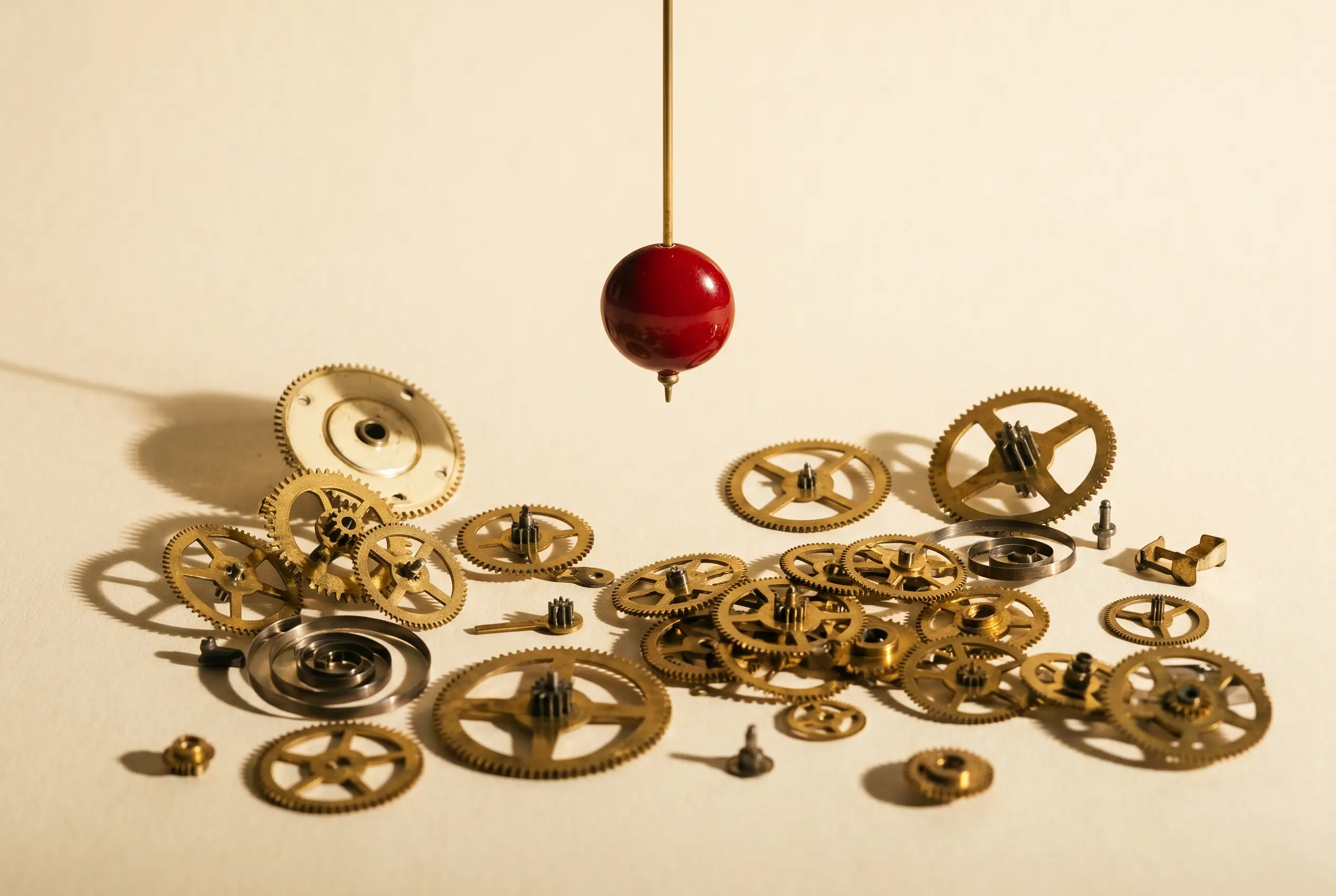
Somewhere in the middle of most afternoons sits an hour that could belong entirely to you — if you haven't already given it away.
We've been sold a version of ambition that measures itself in density: the busier the calendar, the more serious the person. It's a persuasive lie, mostly because it's partly true — output does require input. But at some point the equation flips, and a fully booked day stops being evidence of commitment and starts being evidence of a very efficient system for processing other people's priorities instead of your own.
The Myth of the Full Schedule
Back-to-back calls, inbox sprints, batched content, wall-to-wall meetings — it all looks like productivity from the outside. From the inside, it often means there's no room left for the kind of thinking that doesn't respond to a prompt. Reactive thinking is what fills a scheduled day. Original thinking needs somewhere empty to land.
An unscheduled hour isn't rest, exactly, and it isn't self-care in the way that phrase usually gets used. It's closer to fallow ground. You cannot plant the same field every season without a break and expect the yield to hold. For a while it looks fine. Then one day the harvest quietly gets smaller and nobody can say exactly when it started.
The most expensive thing you own is your uninterrupted attention. The second most expensive is your uninterrupted inattention. Both need protecting.
What the Hour Actually Is — and Isn't
Precision matters here, because vague intentions dissolve fast. An unscheduled hour is not a slow morning ritual. It isn't meditation, though meditation might happen inside it. It isn't journaling, though a thought worth writing down might surface. It isn't a walk with a podcast running, or a bath with a book, or a lunch spent "stepping away" while mentally drafting a reply to someone. Those are all fine things. They are not this thing.
An unscheduled hour is a container with nothing scheduled into it — no inputs, no outputs, nothing to show for it afterward. That absence of a deliverable is the entire point, and it's also the hardest part to defend, because everything about high-output culture treats an empty hour as suspicious.
What tends to surface once the noise is removed:
- The idea that's been trying to get your attention for weeks through the static of a full schedule.
- A low-grade unease that shows up the moment distraction disappears — worth noting, not panicking over.
- Connections your mind makes only when it stops being managed and starts being left alone.
- Genuine preference, as distinct from the performance of enthusiasm most schedules require.
How to Actually Defend It
Defend is the right word, because this hour will not survive on good intentions alone. It needs structure and a certain amount of stubbornness.
Block it like anything else non-negotiable on the calendar — titled, time-stamped, protected. Mid-afternoon tends to work better than early morning, since that's usually when the day's early momentum has run out and the evening's demands haven't started their approach yet. Tell people you're unavailable. Skip the explanation; explaining invites negotiation, and this hour isn't up for negotiation.
The harder discipline is dropping the apology. A visibly empty hour in a culture that rewards visible busyness can feel like it needs defending to other people, not just to your own calendar. It doesn't. Treat it as a structural advantage rather than a guilty secret, because that's a more accurate description of what it actually is. The clarity that shows up afterward isn't a coincidence — it's the direct return on having been unreachable for sixty minutes.
A calendar with no white space looks like seriousness from a distance. Up close, it often produces excellent execution in service of someone else's priorities and a slowly shrinking sense of your own. Protect the empty hour, or the noise will fill it — and the noise was never going to ask permission first.