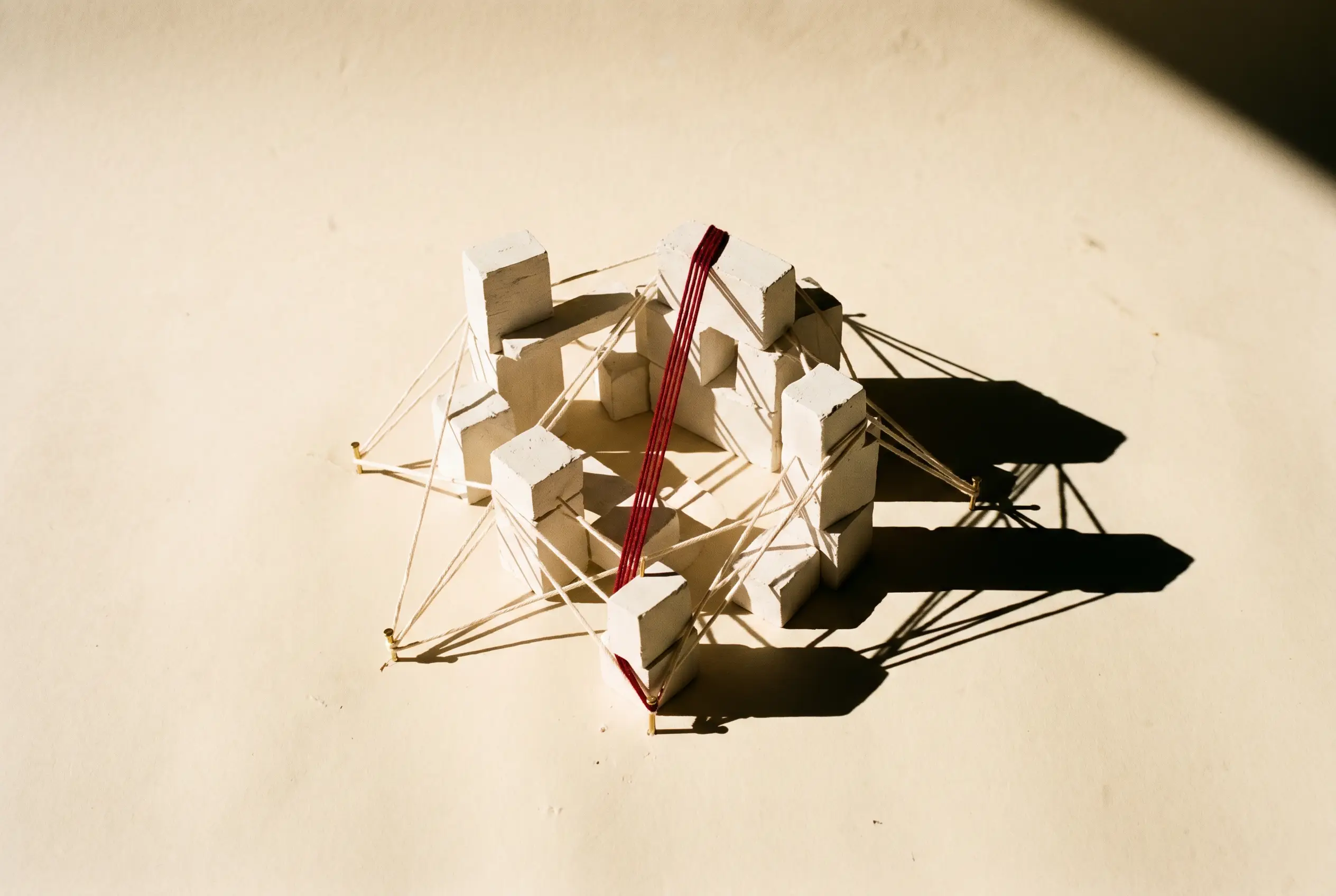
Culture is not what you hang on the wall. Culture is what happens when nobody is watching, when the stakes are real, and when the room goes quiet before someone speaks the uncomfortable truth.
A balance sheet can lie through omission, and culture operates the same way. The numbers can be immaculate while the culture rots beneath the surface like a foundation nobody bothered to inspect. What gets left out — who gets left out — is the actual document. Read any organization's mission statement, then watch its calendar and its budget for a month. The gap between the two is not hypocrisy, exactly. It is architecture: invisible, load-bearing, and almost never designed on purpose.
The Structure You Cannot See on Any Org Chart
Every institution has two organizational charts. The first is printed and laminated. The second lives in the muscle memory of everyone who works there — who actually gets heard in meetings, whose ideas get credited, whose mistakes get forgiven, whose potential gets funded. Learn to read both charts simultaneously, because the gap between them is where culture lives.
That second chart decides everything the first one pretends to. It decides which warnings surface early and which arrive as catastrophes. It decides whether talent stays or quietly starts interviewing. And it applies far beyond any single company. Brilliance is evenly distributed across ZIP codes and income brackets; opportunity is not. Culture is the invisible architecture that decides which of those facts wins.
Culture is not a statement of values posted in a lobby. It is the pattern of decisions made when values are inconvenient.
Nowhere is this more consequential than in the teams building artificial intelligence. The most dangerous thing about AI is not the technology. It is the culture of the teams building it. Bias does not enter a system through code alone. It enters through the unexamined assumptions of people who never had to question whether the system was built for them. Accountability is a cultural act before it is ever a technical one.
What Culture Actually Costs
People talk about culture as though it were ambient — something that simply exists, like weather. It is not. Culture is manufactured. Someone pays for it, and someone pays the price of its absence. Organizations routinely spend millions on rebrand campaigns while their internal culture quietly hemorrhages the exact talent they claim to value. Rebranding is cosmetic surgery on a structural problem.
The cultures worth building share a few stubborn characteristics:
- They make it safe to name what is broken before it becomes catastrophic.
- They distribute credit with the same precision they apply to distributing blame.
- They treat access — to capital, to mentorship, to decision-making — as a design choice, not a default.
- They hold their stated values accountable to their actual behavior, in writing, on a schedule, with consequences.
None of that is soft work. All of it requires the discipline accountants understand viscerally: you cannot manage what you do not measure, and you cannot measure what you refuse to name.
The same logic governs the culture of opportunity itself. Left alone, it replicates in the image of whoever held power last. A student in an under-resourced school district who loves mathematics does not need inspiration. She needs a system that was designed with her in mind. Inspiration without infrastructure is a beautiful dead end.
Building the Architecture Deliberately
There is one question worth asking in every room: who designed this, and who did they imagine when they designed it? That question applies to hiring criteria, to AI training datasets, to board composition, to the unspoken rules about who speaks first and who speaks last.
Culture is not inherited passively. It is chosen, actively and repeatedly, in the small decisions that seem too minor to examine until they calcify into systems. Money used to signal success. Now it signals values — the budget is the most honest cultural document an organization ever produces.
Build deliberately. Or inherit someone else's blueprint. Those are the only two options on the table.