Beauty packaging didn't get a facelift this year. It got a deadline.
Walk the shelf at Sephora or Ulta and the shift reads as aesthetic: brushed aluminum tubes where injection-molded plastic used to sit, glass jars with a removable metal pod instead of a screw-top lid, refill pouches stacked next to the "hero" bottle they're meant to outlive. It looks like a design trend. It's actually regulatory triage. The EU's Packaging and Packaging Waste Regulation entered into force in February 2025 and starts applying on August 12, 2026, and it does not leave room for a brand to opt out with a nice paragraph about values. Every unit of packaging sold in the EU has to carry material-identification and disposal labeling by that date. By 2027, cosmetics companies selling there must offer refillable formats. By 2030, packaging has to hit at least recycling class C. By 2038, only classes A and B are allowed to exist at all.
The law got there first
The U.S. is moving on a messier, state-by-state track, which is its own kind of pressure — a brand can't design one SKU and ship it everywhere anymore. California banned intentionally added PFAS in cosmetics as of January 1, 2025. Connecticut, Maine, and Vermont start enforcing their own PFAS prohibitions on January 1, 2026, and there's a live argument over whether those bans reach the plastic pump or dispenser itself, not just the formula inside it — which is exactly the kind of ambiguity that makes a legal team tell a packaging team to just switch the component to aluminum or glass and stop debating it. Also effective January 1, 2026: California's SB 2960, which bans hotels statewide from stocking miniature single-use shampoo and lotion bottles. That sounds like a footnote. It isn't — travel-size format has been its own packaging discipline for decades, and now a whole category of it has a hard stop date in one of the largest cosmetics markets in the country.
Layer in extended producer responsibility laws, which several states are rolling out with eco-modulation fees attached, and the incentive gets blunt: brands now pay more for packaging that can't be recycled and less for packaging that can. That's not a marketing decision. That's a line item.
Aluminum is having its moment, and refill is the mandate, not the marketing
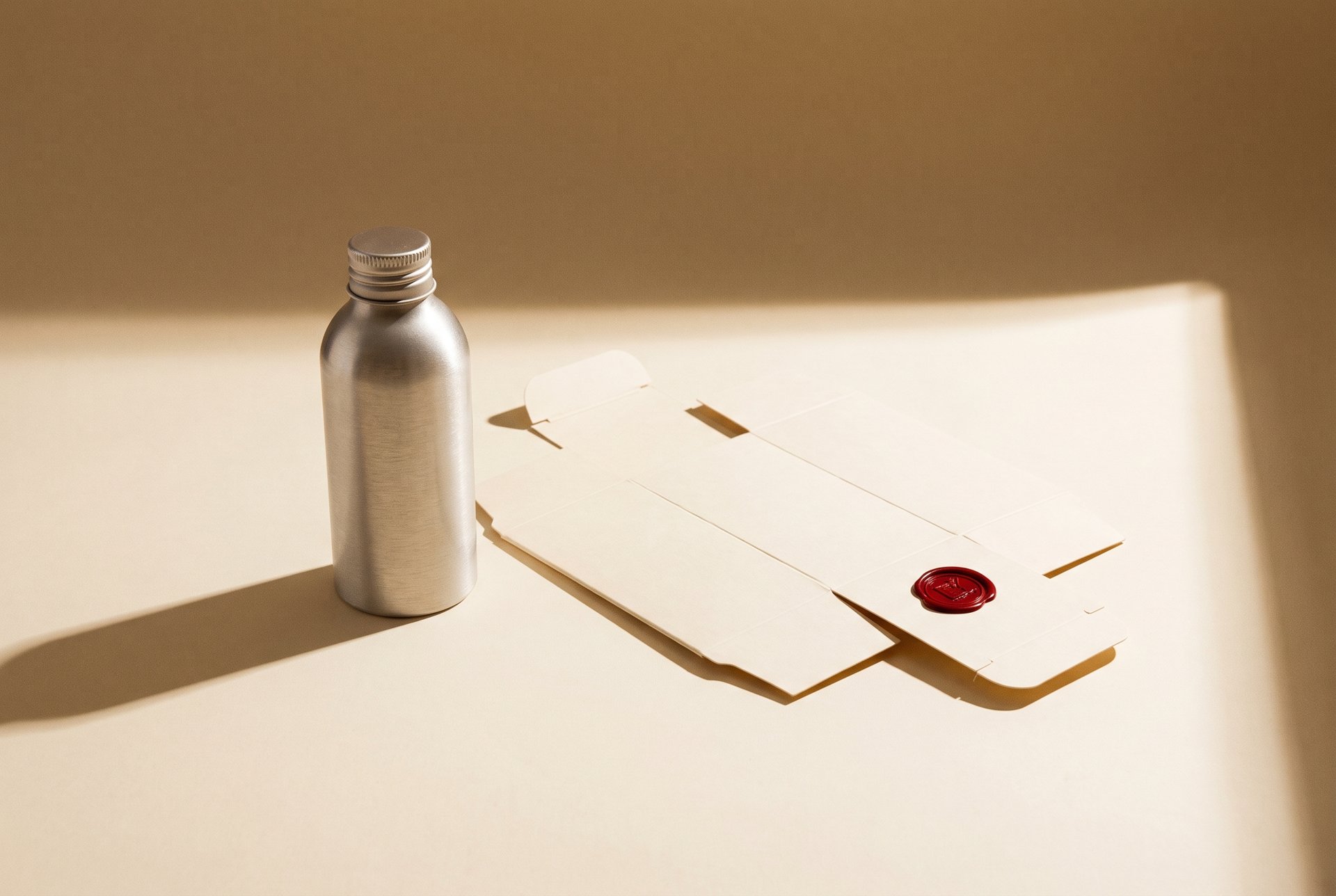
The material story is aluminum. It's infinitely recyclable without quality loss, it reads as premium in a way recycled plastic never quite manages, and it solves the PFAS-in-plastic-components problem in one move. Ilia Beauty has leaned into recycled aluminum and glass across its line for exactly this reason. Expect to see more of it from brands that spent the last decade in matte plastic — aluminum lets a brand claim sustainability and upgrade its shelf presence in the same packaging change, which is a rare two-for-one in this industry.
Refill is no longer a boutique gesture, either. L'Oréal's #JoinTheRefillMovement campaign around World Refill Day 2026 spans 18 of its brands and 28 products, and the company says its refill formats cut plastic use by 60 to 82 percent per refill compared to buying a new full unit each time — with some refill pouches running 100 percent post-consumer recycled content and roughly 60 percent less packaging material than the original vessel. Estée Lauder has taken the same logic into a multicomponent pod system for its Revitalizing Supreme+ Youth Power Crème, where you keep the outer jar and replace only the pod. The global market for refill and reusable cosmetics packaging was estimated at $8.44 billion in 2025 and is projected to reach $11.6 billion by 2030. That's not a niche.
I'd argue the "shelfie" aesthetic — the clean rows of interchangeable, photogenic vessels that made Sephora TikTok what it is — only works because refill systems finally gave brands a physical object worth keeping on the counter instead of tossing in the bin.
What's changing at the material level, in one list:
- Mono-material construction replacing multi-layer pumps and dispensers that recyclers can't sort
- Aluminum and glass displacing virgin plastic for anything sold into PFAS-restricted states or the EU
- Refill pods and pouches designed to be the second, third, and fourth purchase — not a one-off eco gesture
- QR-coded and serialized packaging spreading as counterfeit protection keeps pace with the resale and grey-market boom
The part nobody's marketing
None of this is being sold to customers as "we redesigned our packaging because a state assembly and a Brussels regulator made us." It's being sold as elevated materials and considered design. Both things are true at once, and that's fine — but it's worth naming plainly: the prettiest packaging trend of 2026 is a compliance deadline wearing a very good outfit. Brands that started the aluminum-and-refill transition two or three years ago, before PPWR enforcement and the state PFAS wave landed together, are the ones whose shelf presence looks intentional right now. Everyone else is retrofitting under a deadline, and it shows in how rushed some of these "sustainable refresh" launches read next to the ones that were actually planned.