A cheese board is not a recipe. It is a decision about how you want people to feel the moment they walk into your home.
Presentation does the first thirty seconds of persuasion for you, whether you're pitching a room or setting a table. Before anyone pours a glass or finds a seat, the board has already told them whether tonight is going to be generous or merely adequate. Choose generous. It costs almost nothing extra and it changes everything.
Eight people sounds like a crowd. It is not. Eight people is a dinner party with breathing room. The math is simple: plan for about two ounces of cheese per person if the board is a starter, three if it is the main event. For eight, that means roughly one and a half pounds of cheese total, split across four varieties. Four is the number. Three feels thin. Five starts to look like indecision.
The Architecture of Four Cheeses
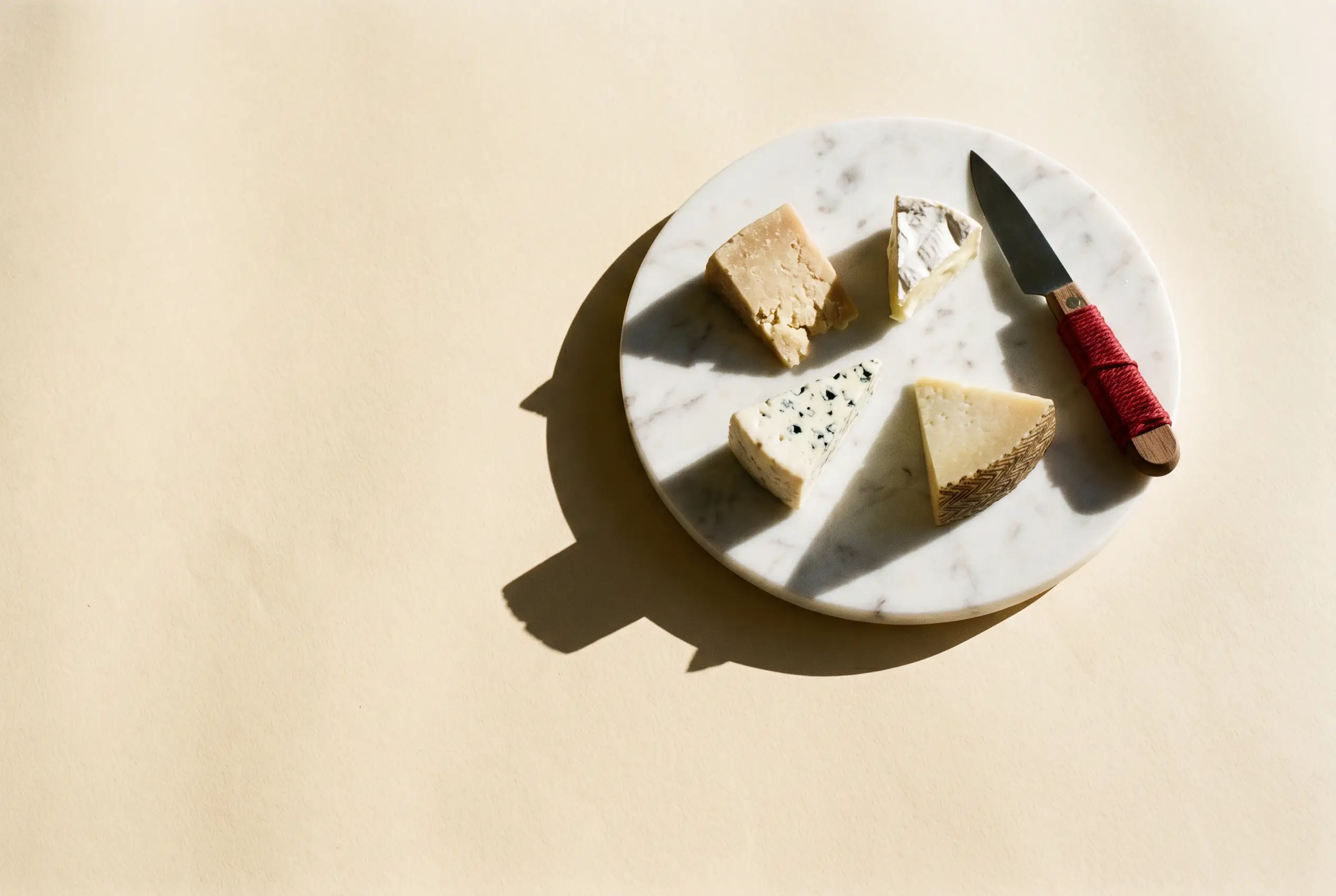
Think in contrasts, not categories. You want something soft, something firm, something aged, and something that makes at least one person at the table say they have never tried that before. A creamy brie or triple-cream does the soft. An aged manchego or gruyère handles firm. A good sharp cheddar, aged eighteen months minimum, earns its place in the middle. Then choose your wildcard — a blue, a smoked gouda, a washed-rind that smells more aggressive than it tastes. The wildcard is where the conversation starts.
I'd argue the best boards are built the way any good structure is: start with the frame, then add texture. The frame holds. The texture is what people remember.
The board should look abundant without looking anxious. Abundance is generous. Anxiety is a garnish that nobody asked for.
Pull the cheese from the refrigerator at least forty-five minutes before guests arrive. Cold cheese is muted cheese. Flavor lives at room temperature. This is the step most people skip, and it is the step that separates a good board from a great one. Set a timer. Walk away. Trust the process.
What Goes Around the Cheese
The accompaniments are not decoration. They are conversation partners for the cheese, and they need to be chosen with the same intentionality. Here is what earns a place on the board:
- Two types of crackers or bread — one neutral and crisp, one seeded or herbed with personality
- Something sweet: honeycomb, fig jam, or fresh grapes, because fat and sugar are old friends
- Something briny: cornichons, castelvetrano olives, or a few marinated artichoke hearts
- Something with texture and richness: marcona almonds, candied walnuts, or spiced pecans
That is the whole list. Resist the urge to add more. Restraint reads as confidence. Overcrowding reads as nerves. Boards get worse the more anxious the builder gets, and the correction always looks better than the original impulse.
The Assembly, Which Takes Twelve Minutes
Use a large wooden board, a slate, or a wide ceramic platter. Place the cheeses first, spaced apart so each one has territory. Cut one edge of each wedge so people know they are allowed to touch it — an uncut cheese is an uninviting cheese. Scatter the crackers next, tucked in clusters rather than lined up like soldiers. Then fill the gaps with the accompaniments, small bowls for anything wet, loose piles for everything else.
The goal is organic, not geometric. You are not presenting a spreadsheet. You are setting a scene.
Provide one knife per cheese, or close to it. Shared knives mix flavors in ways nobody intended. Label the cheeses if your guests are curious types. Skip the labels if they are the kind of people who prefer to discover. You know your people. Trust that knowledge.
One final rule, and it matters more than any of the ones above: do not hover over the board once it is out. Put it down. Step back. Let people graze, linger, and reach across each other. The best boards create the conditions for connection and then get out of the way.
That is, ultimately, what good hosting does. It does the work invisibly so that everyone else can feel effortless. The board is just the most delicious version of that principle.