Most people buy a jar of preserved lemons, use one wedge, and let the rest sit in the refrigerator door like a forgotten New Year's resolution. That is not cooking with preserved lemons. That is decorating a shelf with good intentions.
The technique is older than the recipes that try to explain it, and most of those recipes get the emphasis wrong. They treat preserved lemon as a garnish — a splash of citrus flavor sprinkled on at the end. It is not a garnish. It is a foundational ingredient, closer in function to an anchovy or a fermented bean paste than to a fresh lemon wedge. Once you understand what the cure actually does to the fruit, the uses multiply on their own.
Understand What the Jar Is Actually Doing
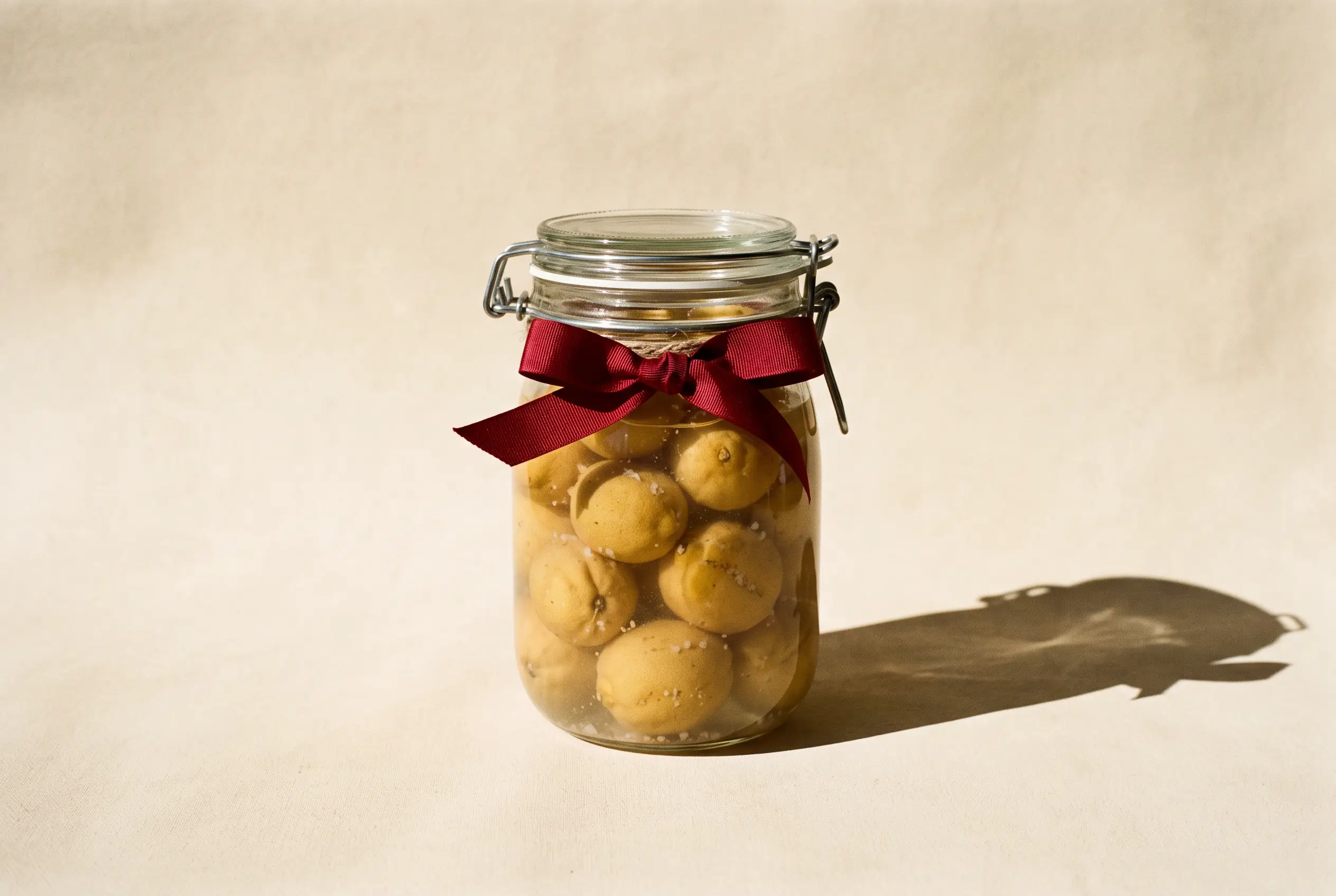
A preserved lemon is not a pickled lemon, and the distinction matters more than most kitchens admit. Pickling relies on acid for preservation. This method relies on salt — an aggressive, generous quantity of it, packed into scored whole lemons, sometimes with a splash of extra lemon juice, occasionally with a bay leaf or a few coriander seeds tucked in for good measure. The jar then sits at room temperature for three to four weeks. The salt draws moisture out of the fruit; the fruit essentially brines itself over time. What comes out the other side is not sour in the way a raw lemon is sour. It is savory, floral, and deeply aromatic, with a softness no fresh citrus can replicate.
This is a cure, not a shortcut. Recipes promising "quick preserved lemons" in twenty-four hours are selling a facsimile — something citrus-adjacent, not the real thing. The full transformation takes weeks, and no amount of extra salt or higher heat will compress the timeline. That is the whole point of the method: you are not adding flavor so much as growing it.
The rind is the prize. Say that clearly and remember it. The pulp inside turns soft and intensely salty; a small scrape of it can add depth to a dressing if you want it, but most North African home cooks discard the pulp entirely and go straight for the rind. That rind carries the essential oil of the lemon skin, mellowed and made silky by weeks of cure. Before using a piece, rinse it under cold running water — not to wash away flavor, but to wash away excess surface salt so the lemon seasons a dish instead of overwhelming it.
Where the Rind Actually Goes
Most food writing lists uses without teaching the instinct behind them. Here is the instinct, dish by dish.
- Tagines and braises: Add one or two strips of rinsed rind early in the cook, alongside the aromatics. Chicken with preserved lemon and olives is the canonical dish, but the same move works with lamb, chickpeas, or a pot of braised root vegetables. The rind melts into the sauce and gives it a savory, citrus-forward backbone that fresh lemon juice cannot fake.
- Chermoula: This North African herb marinade — built from cilantro, parsley, garlic, cumin, paprika, and olive oil — turns extraordinary when a quarter of a minced preserved lemon rind gets worked into the base. Use it on fish, shrimp, or roasted cauliflower, and give it a full night in the refrigerator before cooking.
- Roasted chicken: Tuck thin strips of rind under the skin before roasting. Rendered fat carries the lemon's essential oils through the meat as it cooks.
- Grain salads and dressings: Mince the rind finely and whisk it into a vinaigrette with olive oil, a touch of honey, and fresh herbs. Toss with farro, freekeh, or couscous, along with olives and roasted peppers. The preserved lemon pulls every other ingredient into coherence.
A single jar, made once, will outlast your hesitation. Start it on a Sunday. By the time you remember it exists, it will be ready — which is exactly how the best kitchen projects should work.
The Patience Is the Point
I've tested more than a dozen "fast" preserved lemon methods over the years — vacuum-sealed, pressure-cooked, sped up with extra acid — and none of them produce the same result as three unhurried weeks on a counter. The texture stays wrong. The pulp never fully surrenders. You can taste the rush in the final dish, the way you can taste a sauce that never got its full reduction time.
So buy a wide-mouth glass jar, something you would not mind looking at on a counter for a month. Buy unwaxed lemons, since the peel is the entire point and wax has no place in it. Use more salt than instinct tells you is reasonable — the fruit will absorb only what it needs and press the rest to the bottom of the jar as brine. Then set the jar somewhere out of direct sun and forget about it on purpose.
The waiting is not a delay before the cooking starts. The waiting is the cooking. Everything that happens once you twist the lid open — the tagine, the chermoula, the roast chicken, the grain salad — is simply collecting on an investment made weeks earlier and left alone.