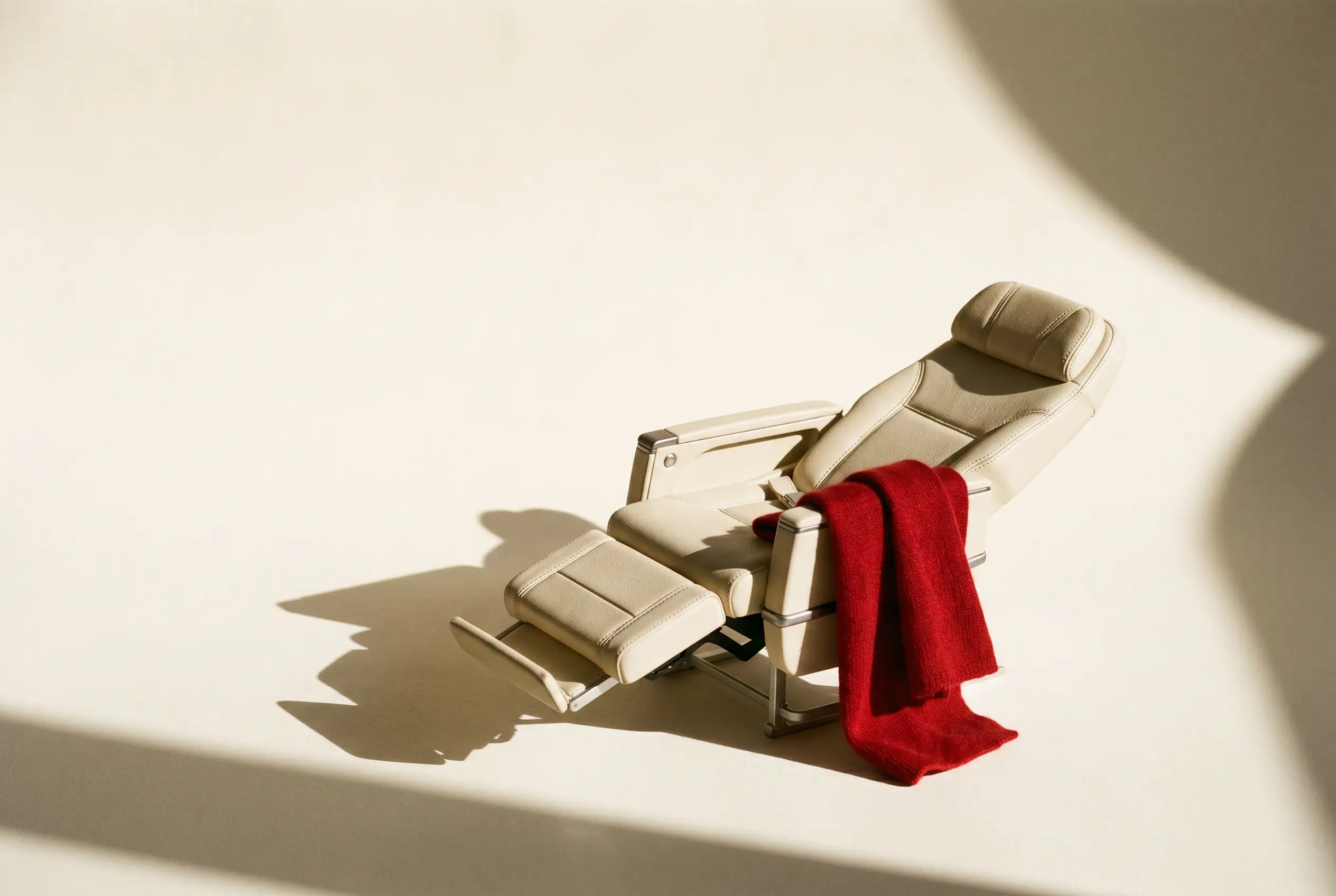
Somewhere over the ocean, between the warm towel and the silence a flat bed at 35,000 feet can buy, the guilt about the upgrade tends to disappear.
Business class isn't a reward handed out after suffering enough through a middle seat. On a long-haul flight, it's closer to a decision about output — arriving rested, thinking clearly, and showing up whole for whatever comes after landing. Depletion isn't a virtue, and treating it like one rarely survives contact with an actual jet-lagged first meeting.
What the Upgrade Actually Buys
Money used to signal distinction. On a long flight, it buys something more specific: recovery, uninterrupted focus, and the margin between showing up functional and showing up as a slightly worse version of yourself for the first two days of a trip. The math isn't complicated — a flat seat and real sleep on an overnight flight routinely save an entire recovery day on the other end. What's harder to grant is the permission to book it without narrating an apology first.
The seat was never the indulgence. The exhaustion was.
For anyone weighing the cost against a full-price economy seat on the same route, the comparison that actually matters isn't ticket price — it's the value of the first day at the destination. A flight that ends in a genuine six to eight hours of horizontal sleep changes what that day looks like far more than any amount of airport lounge coffee can.