Stillness is not passive. A tea ceremony makes that clear in the first three minutes, before a single drop has been poured.
Walking into a machiya in Kyoto's Higashiyama district for the first time tends to arrive with a particular kind of overconfidence — the sense of having read the briefing materials and understood how to be present in a room. The ceremony corrects that assumption quickly. It doesn't require attention so much as submission to a tempo that belongs to no one and cannot be negotiated.
That distinction matters more than it first appears. Most of modern life rewards optimization — faster, cleaner, more efficient. None of that preparation is useful here. The ceremony does not care about credentials. It cares whether a guest can actually receive what's being offered.
The Preparation Is the Point
Before the tea room, guests pass through a roji — a dewy garden path designed to create psychological distance from whatever world they arrived from. This isn't decoration; it's architecture with intention. Guests crouch to enter through a small door called the nijiriguchi, which levels everyone regardless of rank. A feudal lord and a merchant entered the same way. So does everyone else.
Shoes come off before the tatami. Seiza — knees folded beneath the body — is the traditional seating position, though hosts will accommodate guests who can't manage it without making an issue of it. Accepting that accommodation without over-apologizing matters; prolonged apology is its own form of self-centeredness in a room built around humility.
The ceremony gives guests nothing to do except be present. For a certain kind of person, that's the hardest assignment available.
The wagashi — a small sweet served before the tea — arrives first and should be eaten completely before the bowl arrives. This isn't a footnote buried in etiquette guides; it's the sequence. The sweetness prepares the palate for the bitterness of matcha that follows. Sequence matters here the way it matters in any process with a correct order — skip a step and the whole thing loses coherence.
What a Non-Japanese Guest Actually Owes the Room
Honesty matters more than fluency. Most guests won't bow at the precise angle, and will likely turn the bowl the wrong number of times before drinking. Hosts know this already. What they're watching for is sincerity — whether a guest is genuinely inside the experience or performing a tourist's version of it. The two look different from across a tatami mat.
A few specifics carry real weight:
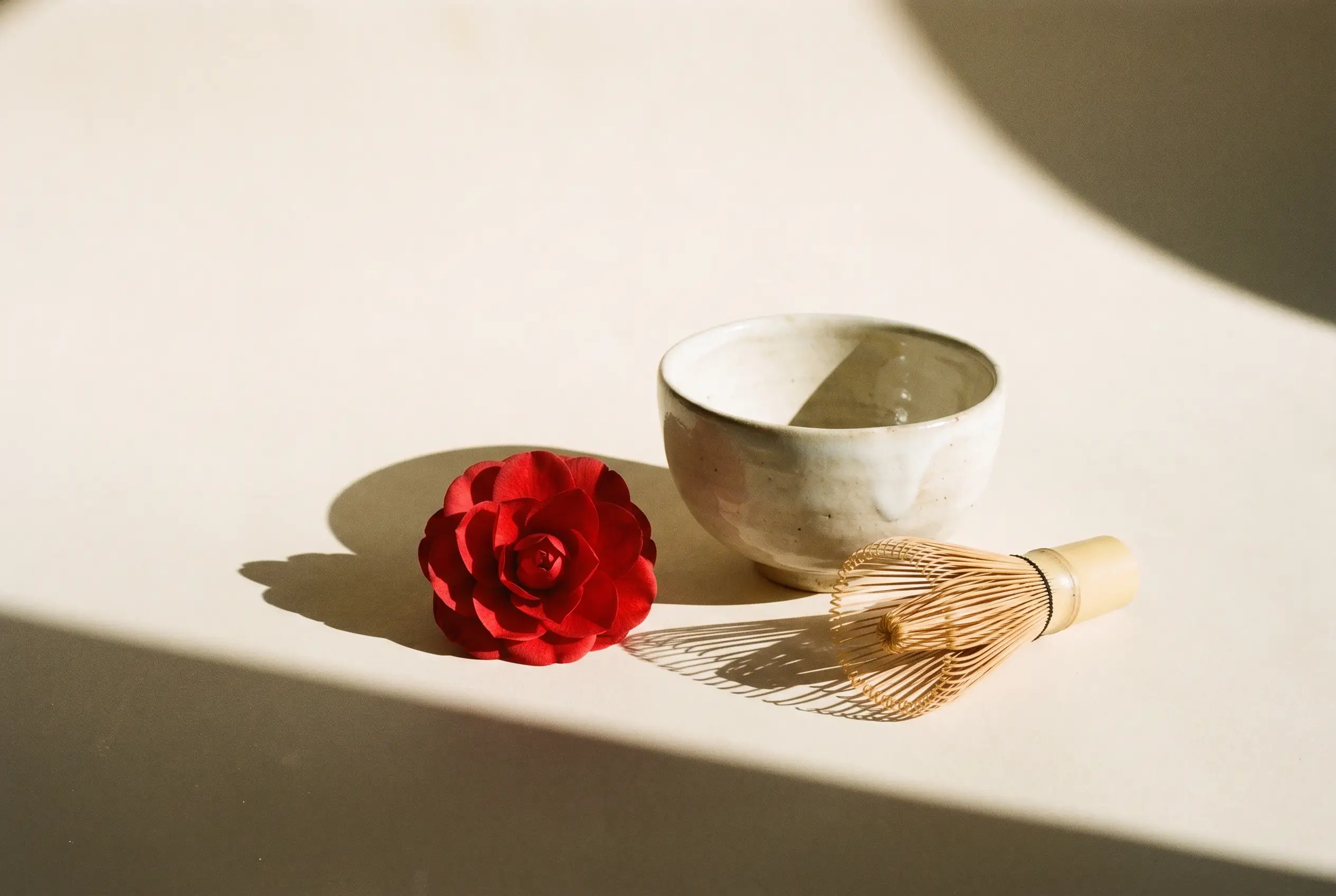
- Turn the bowl clockwise twice before drinking — this faces the decorated front away from the lips, a gesture of humility toward the craft.
- Drink in three and a half sips, not one long pull. The number is intentional; honor it.
- Compliment the bowl after drinking. Hold it, look at it — the ceramics often carry centuries of aesthetic lineage, and attention is the correct response.
- Silence isn't awkward here. Don't fill it. Let it do its work.
In most modern rooms — offices, waiting areas, calls where nobody wants to speak first — silence tends to signal danger. In the tea room, it signals arrival. Learning to tell the difference is worth more than any single piece of cultural trivia acquired before the flight.
What Guests Carry Out
The ceremony rewards rigor and presence in equal measure — it shows that mastery without presence is just performance, and presence without structure is just feeling. It holds both, in a bowl, in a room, across forty minutes that somehow last longer than they should.
The best approach: find a small school in Higashiyama or Uji, book a session that includes instruction rather than just observation, and arrive early. What the ceremony requires of a non-Japanese guest is the same thing it requires of everyone — the willingness to be a student of something older and quieter than themselves.