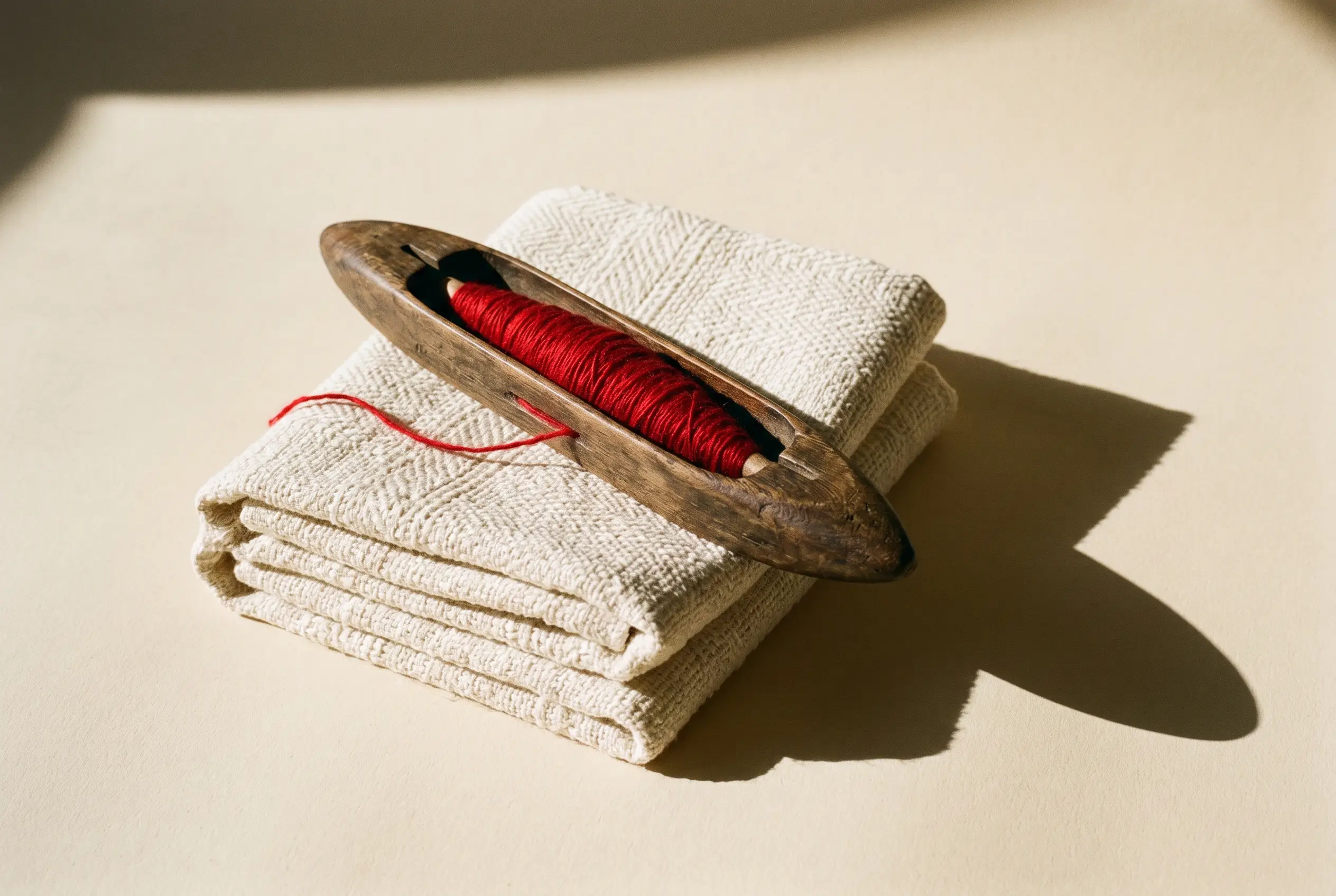
Beautiful cloth does not apologize for its price, and buyers shouldn't apologize for asking where it came from.
Walk through the Kejetia stalls in Kumasi and you'll find kente woven with a precision that looks almost mathematical — every color a column, every pattern a formula someone's grandmother solved by hand. Walk into a boutique gift shop in Accra or Dakar and you'll often find the same fabric family selling for triple the artisan price, having passed through several middlemen and lost its story somewhere along the way. The difference between those two experiences isn't taste. It's information. And information changes everything about what a purchase actually supports.
West Africa produces some of the most technically demanding handwoven textiles on earth. Kente from Ghana. Kita and bogolan from Mali. Aso-oke from Nigeria. Manjak strip cloth from Guinea-Bissau. These aren't decorative objects — they're archives. Each weave pattern carries meaning, each dye source carries geography, and each piece represents the labor of a maker who deserves fair pay and clear credit. Buying without asking flattens all of that into mere product. Product is cheap. Provenance is not.
Know the Supply Chain Before You Open Your Wallet
Ethical sourcing starts before arrival. Research the weaving cooperatives and artisan collectives operating in the regions on the itinerary. Organizations like Fair Trade-certified cooperatives in Ghana's Ashanti Region and women's weaving collectives in Senegal publish pricing structures and membership rosters — treat that research the way any serious buyer would treat due diligence on an investment, because that's effectively what a purchase like this is: an investment in a maker's continued ability to make.
On the ground, ask three questions before any transaction: Who wove this? Where were the materials sourced? What percentage of this price reaches the weaver? A vendor who can't answer the first question is telling you something. A vendor who can't answer the third is telling you more. Sellers who know their own supply chain tend to volunteer that knowledge proudly; sellers who deflect are usually selling a story with a hole in it.
The real luxury isn't the thread count. It's knowing the person who counted the threads was paid what their skill commands.
Mistakes here are common and instructive. A piece sold as hand-painted bogolan mud cloth can turn out, on closer inspection by a textile scholar, to be machine-printed cotton mimicking the resist technique — priced and marketed as artisan work despite being neither. No one necessarily lies outright; buyers simply don't ask precise enough questions. Fabric without provenance is just cloth, regardless of what the price tag implies.
Where to Source With Confidence
Certain categories of sellers make ethical sourcing structurally more likely, though never guaranteed. Seek these out with intention:
- Artisan cooperatives affiliated with national craft councils, such as Ghana's Centre for National Culture in Cape Coast, where weavers sell directly and set their own prices
- NGO-supported women's collectives in Senegal and Burkina Faso that publish annual impact reports and welcome questions about compensation models
- Cultural heritage centers and museum gift shops, where curation standards typically require documented provenance and direct maker relationships
- Individual master weavers who accept studio visits — increasingly common in Ghana's Volta Region and in Kano, Nigeria — where commissioning work means watching the process firsthand
Real luxury, in textiles as in most things, isn't scarcity performed for an audience. It's precision — knowing exactly what you hold and why it matters. A handwoven textile from West Africa, sourced ethically and paid for honestly, carries the weight of a tradition that survived colonialism, survived extraction, and survived being dismissed by people who couldn't replicate it. That weight isn't a burden. It's the point.
Buy the cloth. Ask the questions. Pay the price that reflects what it actually cost to make. Then carry it home and tell people where it came from, and who made it. That's the only receipt that counts.