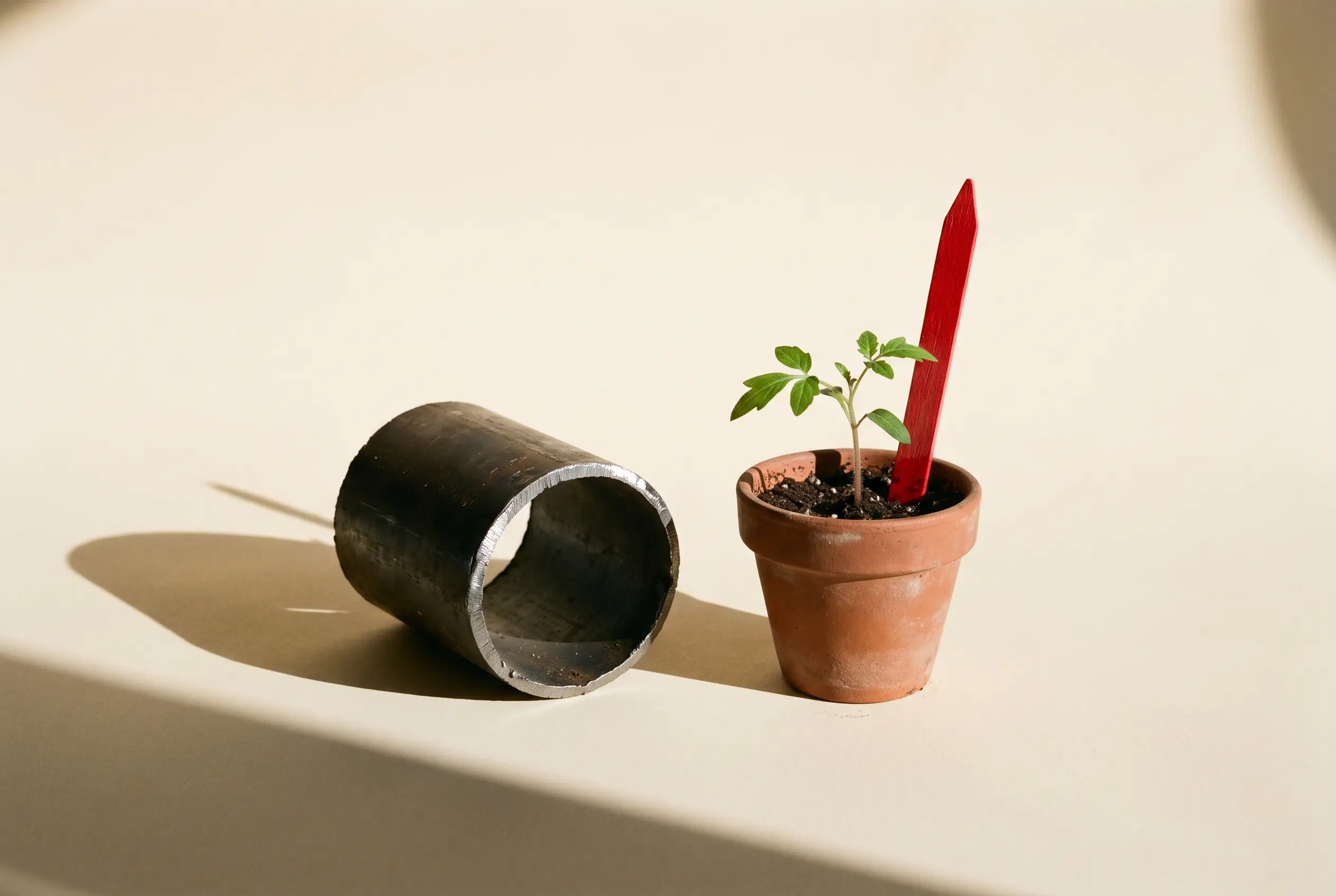
We built the pipeline, and then we wondered why so many people fell out of it.
Talk to enough education funders and you will hear the same word over and over: pipeline. Build the STEM pipeline. Widen the pipeline. Fix the leaks in the pipeline. It is efficient language, and it is the wrong metaphor. A pipeline moves a uniform substance from one end to the other under pressure, at a fixed speed, through a fixed channel. That is not what talent development looks like, and treating it as though it were is exactly why so many capable students enter STEM programs and quietly disappear.
They do not vanish because they lack ability. They vanish because the system was built to move product, not to grow people.
What a Garden Does That a Pipeline Cannot
A garden is patient. It holds different things at different stages at the same time — some plants need shade, some need full sun, some take three seasons to bloom and look like nothing is happening until suddenly it is. A garden requires a gardener who shows up, who notices, who adjusts the water and the light as conditions change. You cannot set a garden on autopilot and expect anything to survive the season.
The pipeline model assumes a single path at a single speed. The garden model assumes growth is nonlinear, that talent shows up on its own timeline, and that cultivation is never really finished. That distinction matters more in STEM funding than almost anywhere else, because STEM attrition rarely happens at the admissions gate. It happens quietly, semester by semester, after the acceptance letter has already been framed.
A pipeline moves people through. A garden grows people up.
The most expensive mistake in education philanthropy is funding the enrollment and abandoning the student the moment they walk through the door — as if admission were the same thing as belonging. It is not. Belonging has to be tended, and tending costs more than a single check.
What Tending Actually Looks Like
Programs that actually move retention and completion numbers are almost never the ones that make it onto a gala program. The interventions that work are unglamorous, recurring, and specific:
- Emergency financial bridges that keep a student enrolled when an unplanned expense lands mid-semester
- Mentorship pairings matched on background and lived experience, not just field of study — a mentor who has never navigated a given obstacle cannot fully guide someone through it
- Cohort structures that give scholars a peer network, since isolation is one of the most reliable predictors of a student stopping out
- Re-entry pathways for students who paused their studies and want back in, because a pause is not the same thing as a quit
None of this is revolutionary. All of it requires sustained attention and sustained funding rather than a single splashy disbursement. That is the actual work, and it is considerably less photogenic than a ribbon-cutting.
The Accountability Gardens Demand
Philanthropy has a long history of buying distinction instead of buying outcomes: a named building, a gala sponsorship, a press release. The transaction happens between the donor and their own legacy, with the student somewhere in the background of the photo. That model still dominates, and it is increasingly indefensible. Funders who want real impact have to accept real accountability for it — which means measuring what happens to a student five years after the scholarship, not five weeks after the check clears.
Impact measurement in education philanthropy is still embarrassingly underdeveloped for a sector that talks endlessly about data. Most programs track inputs: dollars disbursed, applications received, seats filled. Almost none track roots: whether a student who received support at year one was still enrolled, still mentored, still connected at year four.
A garden is not a metaphor for softness. It is a metaphor for rigor applied with patience. Every gardener knows the work is daily, that conditions shift without warning, that some things fail and you replant rather than mourn. You do not abandon the soil because one season was hard. You study what happened, adjust the conditions, and try again.
STEM does not have a talent shortage. It has a tending shortage. Fund the tending, and watch what actually grows.