
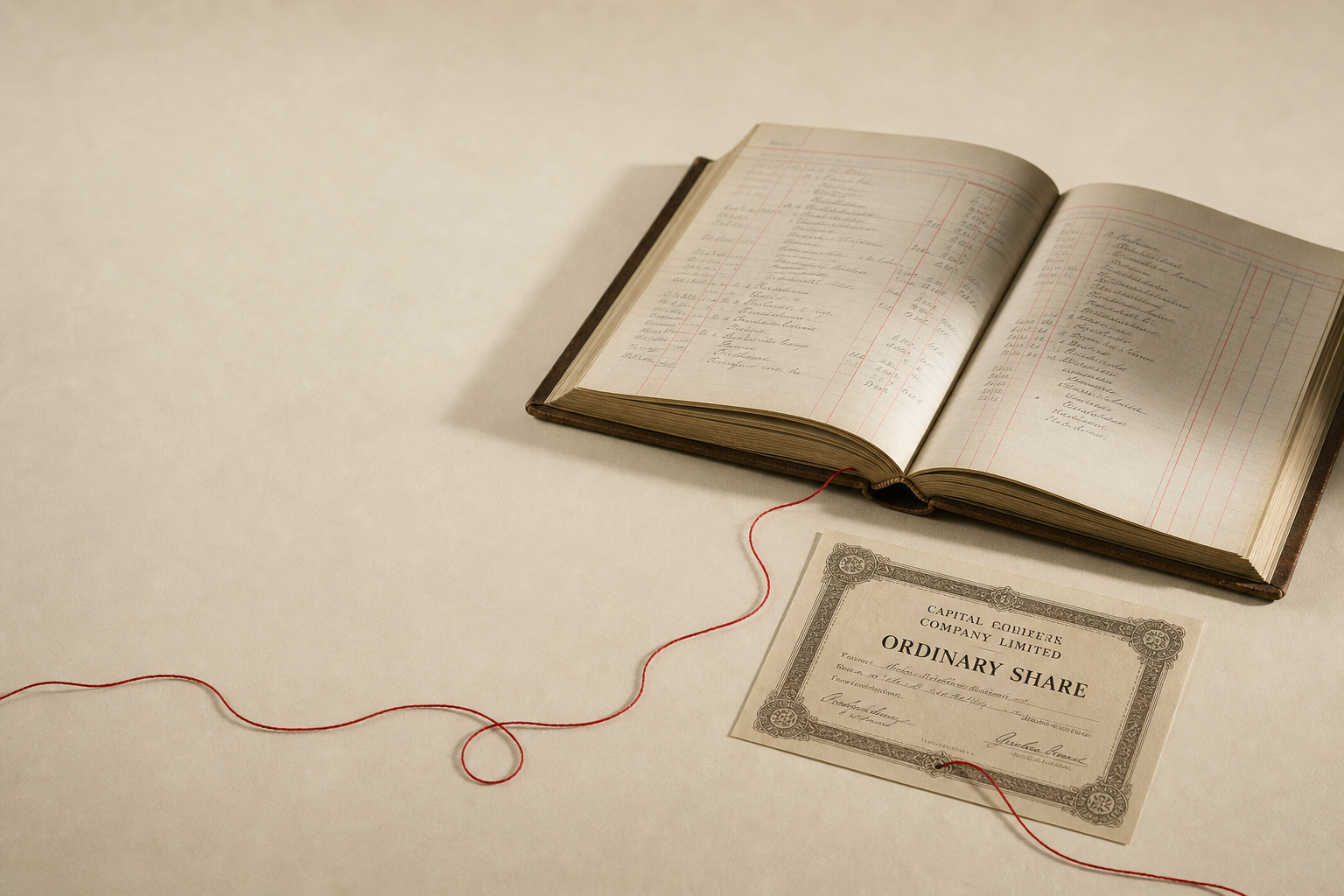
On February 22, 2025, in Berkshire Hathaway's annual shareholder letter, Warren Buffett said that despite Berkshire's unusually large cash position, “the great majority of your money remains in equities.” That preference would not change. His distinction was between owning businesses and holding money, not simply between buying and selling listed stocks. A share certificate represents a business interest, not a trading instruction.
The 2024 record supports that distinction. Berkshire sold substantially more stock than it bought, repurchased relatively little of itself and accumulated Treasury bills. It also retained its controlled operating businesses. Buffett's strategy is more conditional than the instruction to buy good stocks and never sell.
What does he buy?
Buffett's 1977 letter supplies a compact selection rule. Berkshire wanted businesses it could understand, with favorable long-term prospects, honest and competent management, and attractive prices. He applied those criteria to marketable shares much as he would to an entire business.
The 1996 letter makes the object clearer. The investor should buy a part interest, at a rational price, in an understandable business whose earnings are likely to be materially higher over the following years. The unit of analysis is the business. The stock quotation supplies the purchase price.
Berkshire's 2024 letter separates that ownership into 2 forms. One consists of controlled businesses, including insurance operations, BNSF and Berkshire Hathaway Energy. The other consists of minority holdings in publicly traded companies.
Buffett reported that the marketable equity portfolio fell from $354 billion to $272 billion during 2024. He also said the value of Berkshire's controlled, unquoted businesses remained substantially greater than the marketable portfolio. Reading only the stock account leaves out the larger ownership category in his explanation.
What makes a price acceptable?
The 1989 letter records a correction to Buffett's earlier preference for very cheap businesses. His formulation was to prefer a wonderful company at a fair price over a fair company at a wonderful price. Business quality changed the calculation. It did not eliminate the calculation.
The 1992 letter supplies the valuation principle. The value of a business depends on the cash it can produce over its remaining life, discounted to the present. Buffett also rejected a neat division between growth investing and value investing. Growth matters because it changes the cash an owner can expect to receive.
These are not instructions to buy a familiar company at any quotation. Nor does a low price alone establish that a deteriorating business is worth owning.
The 2024 Form 10-K shows the resulting selectivity without revealing every valuation. Berkshire purchased approximately $9.2 billion of equity securities and received approximately $143.4 billion from equity sales during 2024. A standing preference for business ownership did not oblige Buffett to replace each investment sold with another listed stock.
Does forever prohibit selling?
The famous holding-period rule comes from the 1988 letter. Buffett said Berkshire's favorite holding period was forever when it owned portions of outstanding businesses with outstanding managements. The qualification belongs to the rule. It is not fine print added by later interpreters.
A long intended holding period allows business results to matter more than the next quotation. It does not promise that every purchase will remain suitable indefinitely.
Berkshire's 2024 sales are decisive evidence against interpreting “forever” as a ban on selling. They also do not, by themselves, explain Buffett's valuation of every company sold. The annual cash-flow statement records transactions, not a complete investment diary.
The other side of the record matters. In the 2024 letter, Buffett described Berkshire's holdings in 5 Japanese trading companies, first purchased in July 2019, and said Berkshire expected to retain them for many decades. Large sales elsewhere and intended multidecade ownership appeared in the same annual account. Patience was selective, not universal.
When does he buy Berkshire?
Repurchases apply the purchase-price test to Berkshire's own shares. They are not an automatic reward for having surplus cash.
The 2011 letter explained that repurchases benefit continuing shareholders when shares are bought below intrinsic value. Berkshire's authorization then used a ceiling of 110% of book value, which Buffett considered a conservative proxy for value at that time.
The 2024 Form 10-K describes a different authorization. Berkshire could repurchase shares when Buffett considered the price below intrinsic value, conservatively determined. The program specified neither a required purchase amount nor an expiration date. It also prohibited repurchases that would reduce consolidated cash, cash equivalents and Treasury bills below $30 billion.
Berkshire spent approximately $2.9 billion on repurchases during 2024. It bought no shares under the program in the fourth quarter. The presence of a large reserve therefore did not create an obligation to purchase.
Berkshire does not publish an independently verifiable intrinsic value for each repurchase date. The filing establishes the governing condition and the transactions. It cannot establish that Buffett's valuation was correct.
Why hold Treasury bills?
Buffett's 2023 letter states a separate rule: Berkshire should never risk permanent loss of capital. That is a constraint on the investment program, not another description of an attractive stock.
The reserve has an explicit place in Berkshire's capital policy. The 2024 repurchase restriction protects a minimum pool of liquid assets even when management considers its own shares cheap. Price is not the only permission required to spend.
At December 31, 2024, Berkshire reported approximately $286.5 billion in short-term U.S. Treasury bills, alongside cash and cash equivalents. These holdings were not operating businesses, but neither were they evidence that Berkshire had abandoned business ownership.
The 2024 letter expressly resisted that interpretation. Buffett said equities remained the predominant destination for shareholders' money when controlled businesses were included. The report supports a narrower conclusion than a prediction of an imminent market collapse: Berkshire held a substantial liquid reserve while retaining a much larger business-ownership commitment than its listed portfolio alone revealed.
What does insurance supply?
Buffett's 2014 letter explains float as money Berkshire holds because insurance premiums arrive before the associated claims are paid. Individual claims are settled, but continuing insurance operations can replenish the pool.
Float is not shareholder equity or money that belongs unconditionally to Berkshire. Insurers owe policyholders. Its investment usefulness depends partly on how much Berkshire pays, through underwriting results, to obtain it.
If premiums fail to cover claims and expenses, underwriting losses impose a cost. If underwriting produces a profit, Berkshire has effectively been paid to hold the funds before claims come due. Investment returns and underwriting discipline are therefore connected parts of the model.
The 2024 Form 10-K reports approximately $171 billion of float at December 31, 2024, compared with $169 billion a year earlier. Berkshire also recorded an underwriting profit in 2024, making the average cost of float negative for that year. The reserve and investment portfolio sit beside real insurance obligations, not a free source of permanent shareholder capital.
What survives the test?
Buffett's investment strategy is to own productive businesses at acceptable prices while preserving the financial capacity to hold them. Berkshire's 2024 record follows that architecture: business ownership remained central, stock sales exceeded purchases, repurchases remained conditional, Treasury reserves were substantial and profitable insurance supplied float. The slogans fail where the conditions begin. Long ownership does not prohibit selling, and preferring equities does not require spending every available dollar.