Mole negro does not care about your schedule, your kitchen confidence, or your need for a shortcut — and that is exactly why it rewards the cooks who respect it.
Some sauces are additive. Mole negro is architectural. Every layer exists to support the one built on top of it, and skip a step or rush a stage and the whole structure reads thin. It takes two full days, uses ingredients most home cooks have never bought before, and demands a kind of patience most recipes never ask for. The payoff is a spoonful that is dark, complex, bitter at the edges and sweet at the center, carrying smoke and dried fruit and something almost impossible to name. Oaxacan cooks have built this sauce for generations, largely without written recipes. Here is the version written down, step by step, for anyone ready to actually do it.
The Chiles Are Not Negotiable
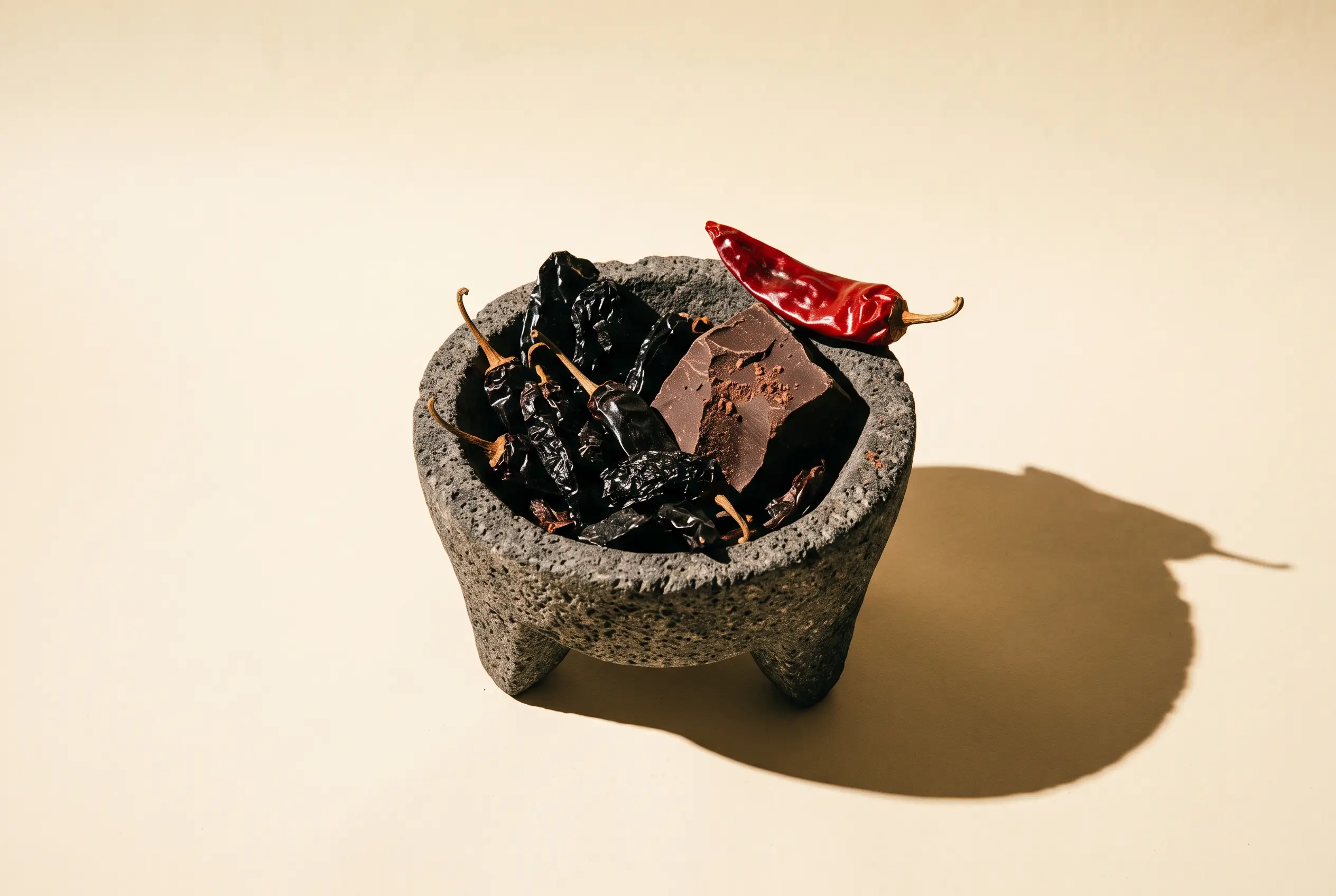
Authentic mole negro is built on a specific architecture of dried chiles, and substitutions collapse the whole thing. You need chilhuacle negro for depth and earthiness, mulato for its chocolate undertone and mild heat, pasilla for dried-fruit complexity, and ancho for body and sweetness. Seek these out at a Mexican grocery or order them online, but get the correct four — this is the one place in the recipe where a swap changes the outcome entirely. Plan on eight to ten chiles total, two or three of each variety, for a sauce that serves eight generously. Remove the stems and seeds, but do not discard the seeds. You will need them shortly.
Toast each chile variety separately in a dry cast-iron skillet over medium heat, pressing them flat, thirty seconds per side, until they blister and release their fragrance. Now comes the step that separates real mole negro from every imitation: you burn the reserved seeds in that same dry skillet until they are genuinely black, and you do the same to a torn corn tortilla, blackening it completely. This controlled charring is where the sauce gets both its near-black color and its signature bitter backbone. It looks like a mistake the first time you do it. It is not. Soak all the toasted chiles in hot water for thirty minutes afterward, and save that soaking liquid — it is bitter, complex, and goes back into the sauce by the ladleful.
The Layering Is the Actual Work
Mole negro is less a recipe than a sequence of decisions made slowly over heat. After the chiles, build the remaining layers one at a time:
- Char a quartered white onion and whole unpeeled garlic cloves directly on a dry comal until blackened outside and soft within — this is where a structural sweetness comes from.
- Toast sesame seeds, a small handful of raisins, one dried chipotle, and a few whole black peppercorns separately, each until fragrant and just darkened.
- Fry a ripe tomato and two tomatillos in a little lard or neutral oil until they collapse and caramelize at the edges.
- Add a cinnamon stick, two cloves, and a small piece of Mexican chocolate — Ibarra works well — at the blending stage, not before.
Blend everything in batches with the reserved chile-soaking liquid, then strain through a medium-mesh sieve. Fry the strained sauce in a heavy pot with a thin film of lard or oil over high heat, stirring constantly, until it darkens two shades and thickens against the bottom of the pot. This is the step most home cooks under-cook. The sauce should spit and stain the stovetop. Stand there anyway — it is a sign the water content is actually reducing.
A sauce this slow will not be hurried by a hungry table. Rushing it just produces a thinner, flatter version of the same dish.
Reduce the heat to low and add warm turkey or chicken broth, one cup at a time, over the next hour, stirring often and tasting constantly. Adjust with salt, a touch more chocolate, or a pinch of sugar if the bitterness needs balancing. The sauce is finished when it coats the back of a spoon thickly and small rings of fat begin to pool on the surface — usually another thirty to forty minutes of quiet attention.
Serving and Making Ahead
Serve mole negro over turkey — traditionally a whole bird braised directly in the finished sauce — alongside fresh tortillas and rice. If at all possible, make it a day ahead. Like most long-cooked sauces, mole negro improves overnight: the individual notes stop competing for attention and start reading as one unified flavor. Reheat gently over low heat, thinning with a splash of broth if it has thickened too far in the refrigerator, and it will taste better on day two than it did coming off the stove.