The forest does not care about your schedule. Chanterelles surface after the first hard autumn rain, on their own timeline, and no amount of hurrying changes that. Foraging for wild mushrooms in the Pacific Northwest is one of the few pursuits left that simply will not be optimized — which is exactly why it teaches you something most productivity advice cannot.
Foraging is not a hobby you master in a weekend. It is a practice that rewards a specific quality of attention: slow, low, and patient. You cannot rush a chanterelle out from under a sword fern. It either exists there or it does not, and your impatience has no bearing on the fact. I'd argue this is the single hardest adjustment for beginners — not the identification, not the gear, but learning to let the forest set the pace.
Understanding the Region's Mycological Calendar
The Pacific Northwest runs on moisture and soil temperature, not on human ambition. Golden chanterelles tend to emerge once autumn rains soak the ground and daytime temperatures settle into the 50s. Hedgehog mushrooms follow a few weeks behind. King boletes appear and vanish in windows measured in days, sometimes overnight after a warm, wet stretch. Missing that window by a week can mean an empty basket, no matter how many trails you cover.
New foragers often make the same early mistake: walking too fast and scanning from standing height, which is exactly the wrong height for spotting anything. Experienced foragers work low, moving a few feet at a time, checking under salal and along the duff line where fungi push up through leaf litter. One longtime forager describes it as "looking for mushrooms the way you'd look for a parking space" — which is to say, badly, if you're only glancing.
Slowing down is not a retreat from productivity. It is the precondition for seeing anything clearly at all.
What to Bring, and What to Leave Alone
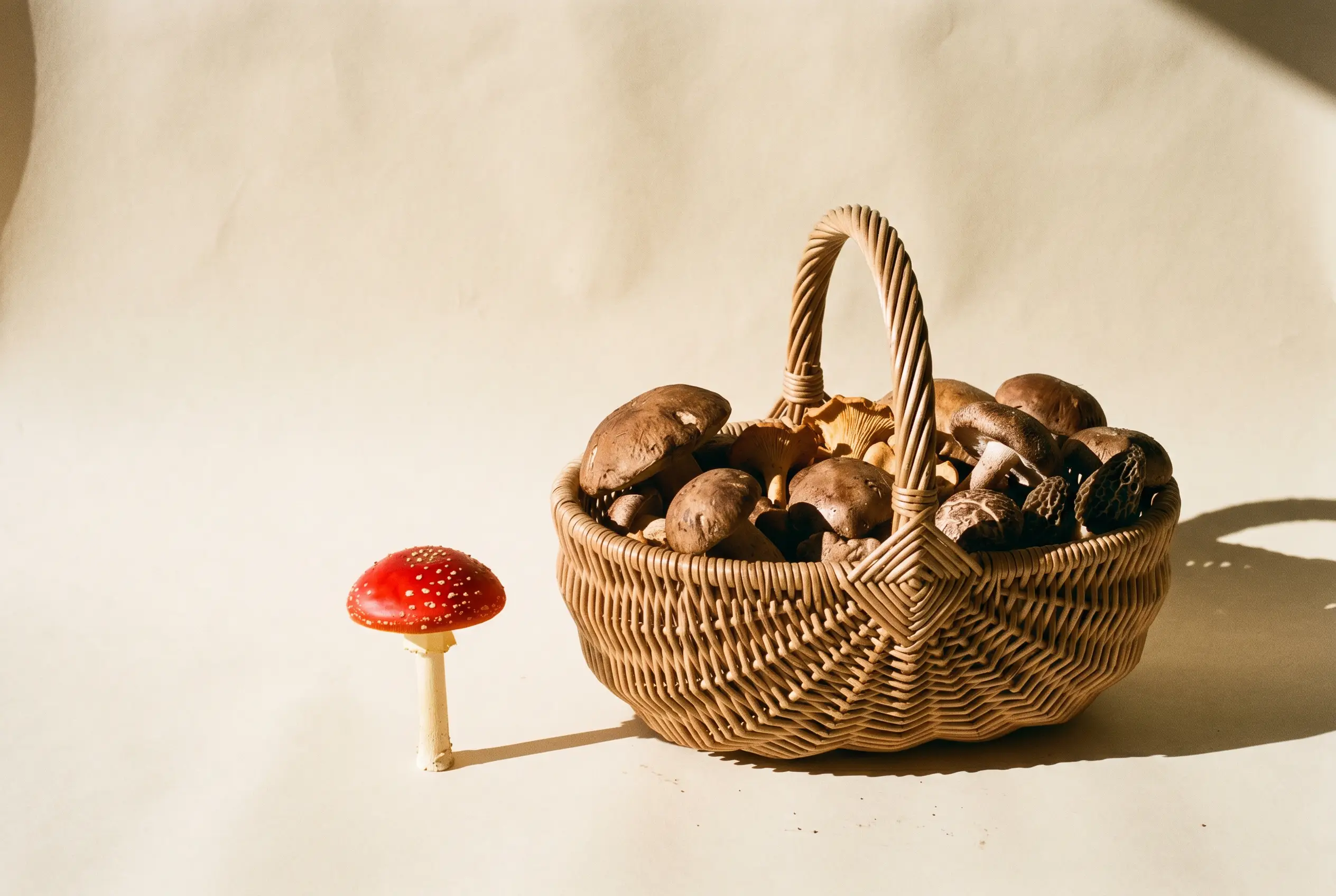
A wicker or mesh basket is standard for a reason: it lets spores scatter as you walk, reseeding the ground behind you, which plastic bags do not. Bring a small knife for a clean cut at the base, a soft brush for cleaning in the field, and a field guide specific to the region — apps are useful, but a proper regional guide catches details a photo misses. Never eat anything you cannot identify with total confidence from at least two independent sources, and when in doubt, leave it in the ground. The Pacific Northwest hosts several toxic look-alikes for its most popular edible species, and the consequences of a wrong guess range from unpleasant to fatal.
- Walk slowly and scan low — most productive finds sit just off the main trail, not on it.
- Resist the urge to decide quickly. The best foragers take a second look, check a spore print, and confirm before cutting.
- Treat stillness as the method, not a deficit. Standing quietly for thirty seconds in one spot reveals more than covering another hundred yards.
- Always forage with permission on private land and a valid permit on public land — rules vary by forest and change seasonally.
The Larger Lesson in the Duff
What makes foraging worth the trip, beyond the eventual pan of sautéed chanterelles, is the recalibration it forces. Most of modern work rewards speed: fast decisions, fast replies, fast conclusions. The forest rewards the opposite. It asks you to withhold judgment, tolerate ambiguity, and trust that the thing you are looking for is actually there — you simply have not looked patiently enough yet.
That trade-off, speed against presence, is not really about mushrooms. It shows up anywhere precision matters more than velocity: in editing, in diagnosis, in any decision that punishes a rushed first guess. The forest just makes the lesson physical and immediate, with a basket to show for it or not.
Rain on bigleaf maple, the particular quiet under old-growth Douglas fir, the smell of soil after a week of October storms — these are not scenery. In foraging, they are the data. Learn to read them, and the forest stops being a backdrop and starts being a teacher that rewards return visits over urgency, every time.