The mountain does not care about good intentions, and above 10,000 feet, neither does thin air.
High altitude changes the math. The sun hits differently. Temperature swings are not inconvenient — they are genuinely dangerous. A clear morning at the trailhead can become a full electrical storm by early afternoon, and the air is thin enough that the body works harder than it feels like it should. Confident hikers turn around at mile three more often than anyone expects, headachy and underprepared, because they packed for a lower elevation and a different day entirely.
Altitude sickness does not check anyone's fitness level first. It affects trail runners and casual walkers with the same indifference, which is exactly why the invisible gear matters as much as anything zipped into a pocket.
The mountains forgive the humble. They punish the efficient.
The Layers Come First, Always
The highest-probability mistake on high-altitude trails is the thermal miscalculation — dressing for the parking lot temperature instead of the ridge two hours out. Three layers, minimum: a moisture-wicking base that actually breathes, a midlayer with real insulation, and a hardshell that packs to the size of a grapefruit. The hardshell is not optional. It gets pulled out in July, in August, on what looked like a perfect September morning. Weather at elevation writes its own calendar.
A lightweight buff and a merino wool beanie round this out. They weigh almost nothing and save more than one afternoon from becoming miserable. The neck and head are where cold enters first, and no summit is worth losing to a stiff wind that four ounces of fabric could have blocked.
What Actually Lives in the Bag
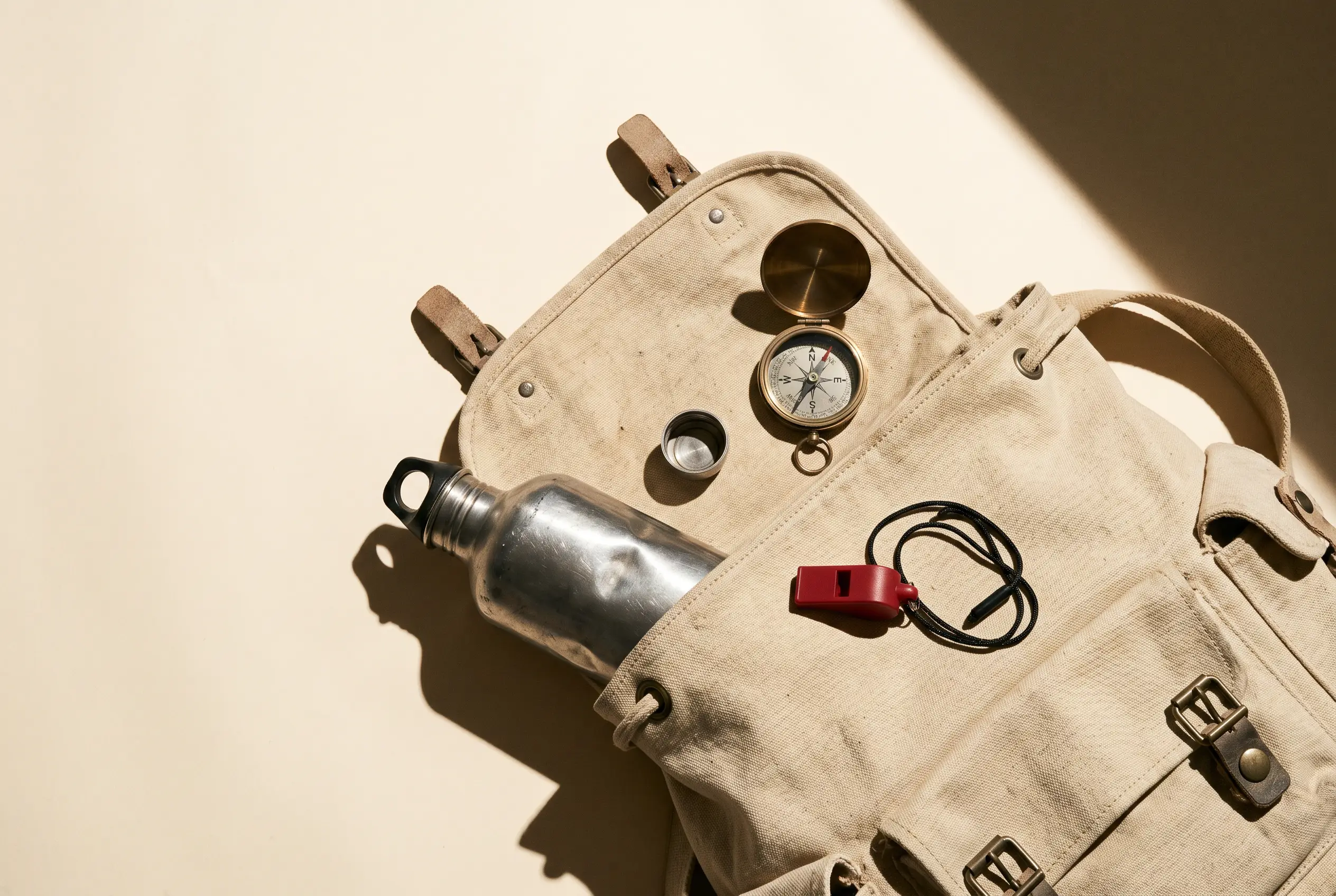
- A headlamp with fresh batteries. Day hikes become night hikes faster than anyone plans for, especially on a late start or a trail that runs longer than the app promised. Carrying it on short outings never wastes the weight.
- A water filter or purification tablets. Altitude increases fluid loss significantly, and carrying enough water from the trailhead to last the full day is rarely a safe bet. A compact filter allows drinking from streams without gambling on the next 48 hours.
- High-calorie, no-nonsense food. Not snacks — fuel. Almond butter packets, hard cheese, dense seed crackers, dark chocolate with a high cocoa percentage. Nothing that needs preparation, nothing that melts into a disaster. Altitude suppresses appetite even as the body burns hard, so eating on a schedule beats waiting for hunger.
- A small first aid kit with altitude-specific additions. Standard kit plus ibuprofen for headaches, blister treatment, and an emergency mylar blanket. The blanket weighs almost nothing and reflects enough body heat to matter if someone in the group goes down and help is still far away.
The Invisible Gear
A category of preparation fits in no bag. Call it the invisible gear — the part most people skip because it carries no price tag and no review on an outdoor retailer's site. It is knowing the trailhead elevation, the summit elevation, and the delta between them. It is checking the weather not once but three times: the night before, the morning of, and right before leaving the car. It is telling someone where you are going and when you expect to return. Simple things. Boring things. The things that keep a beautiful day from becoming a search-and-rescue story.
Systems fail at the edges. The edges are where hikers are unprepared, overconfident, or moving too fast to notice the signs. The trail above 10,000 feet is an edge environment. Respect it, read it, and pack like it matters.
The view from the top is always worth it. Getting there first is the whole assignment.