
Eyebrows do more structural work than almost any other feature on the face, which is exactly why losing them changes how a person reads their own reflection.
Eyebrow thinning has many possible causes, including grooming trauma, alopecia areata, scarring alopecia, infection, medication or treatment effects, and other medical conditions. A makeup map cannot diagnose whether follicles are dormant, inflamed, scarred, or permanently lost; new, patchy, asymmetric, itchy, scaly, or progressive loss should be evaluated.123
Learn the structure before reaching for product
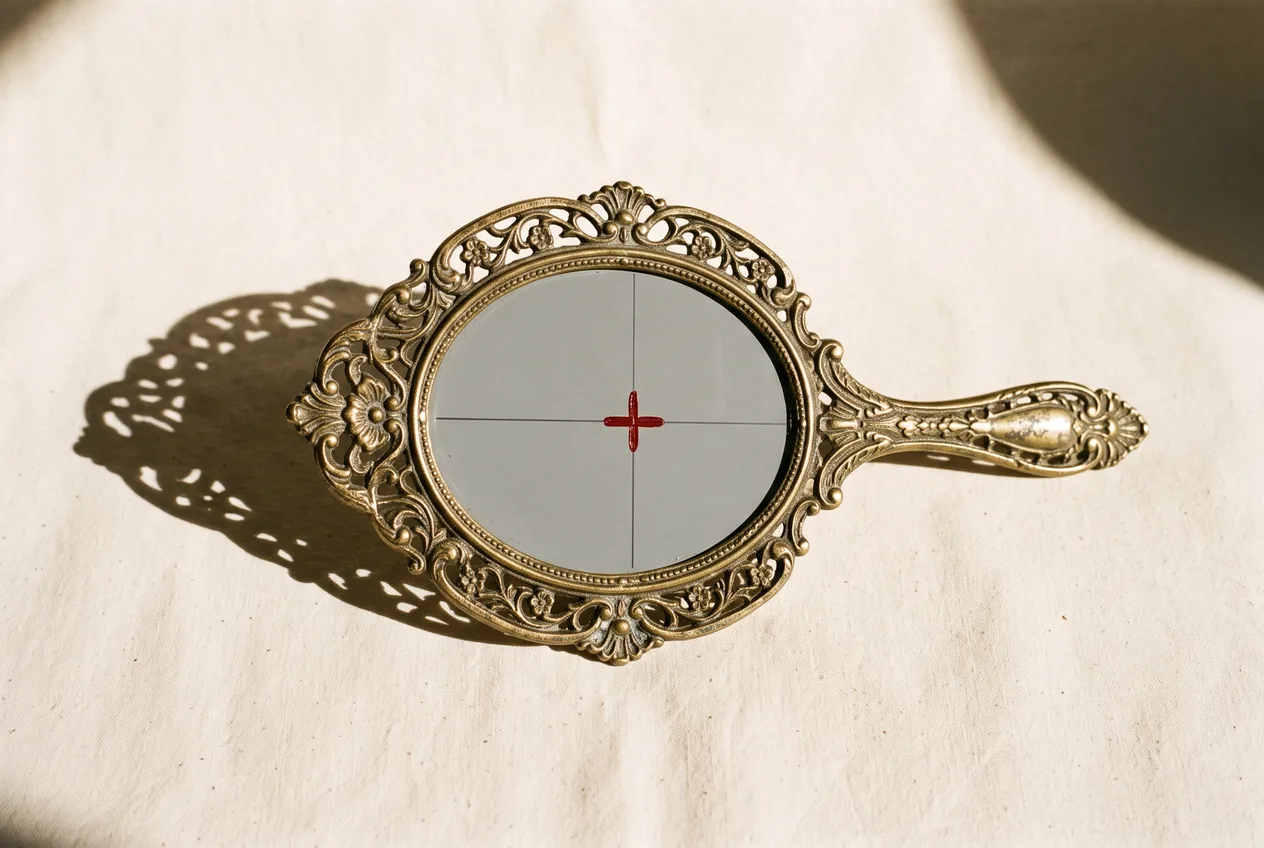
A brow is not a line drawn from memory or habit. It's a relationship between bone, light, and three anchor points that define every eyebrow shape: the start point directly above the inner corner of the eye, the arch above the outer edge of the iris, and the tail that tapers toward the temple. When hair is sparse or absent, those coordinates don't disappear; the underlying bone structure still holds them. Learning to find those anchor points with a straightedge or a brush handle, before any color goes on, prevents the two most common mistakes in brow reconstruction: shapes drawn too far from the face's actual proportions, and tails that stop short and read as unfinished.
A brow is not a line you draw. It is a conversation between bone, light, and intention. Learn the bone first. The rest is technique.
Regrowth and treatment depend on the diagnosis. Avoid further traction or aggressive tweezing while the cause is unclear, and consult a dermatologist before assuming that time, a cosmetic serum, or minoxidil will restore the brow.123
Building a routine that actually holds up
Four principles separate a brow routine that survives a full day from one that dissolves by lunch:
- Structure before color. map the shape with a clear brow gel or a skin-toned pencil before adding pigment, so the underlying architecture is correct from the first stroke.
- Pressure control, a feather-light hand with a fine micro-tip pencil mimics individual hairs; heavy pressure reads as a drawn line no matter how good the product is.
- Match undertone, not just shade; a cool ash pencil on a naturally warm brow reads as obviously artificial; testing color against the brow bone in daylight, not store lighting, catches this before it becomes a daily error.
- Set with translucent powder over pencil, this one step extends wear by hours and softens a precise line into something that reads as natural growth rather than illustration.
Brow lamination and tinting can help visually fill gaps as a middle step, and for longer-term solutions, options like microblading or nano-stroke tattooing offer a longer runway between touch-ups. These are worth researching carefully, technique and pigment quality vary enormously between practitioners, and a healed result can look quite different from the result on day one, so reviewing a practitioner's healed-work portfolio matters more than reviewing fresh photos.
Patience is part of the protocol
When regrowth occurs, timing and texture vary with cause and treatment. Patchiness is not automatically normal; continued loss, inflammation, or scarring can require prompt treatment to protect remaining follicles.123
The goal is never to erase the fact that brows are mid-transition. It's to build a routine precise enough that the face reads as intentional at every stage of that transition, bone-mapped, evenly toned, and set to last through whatever the day actually demands.