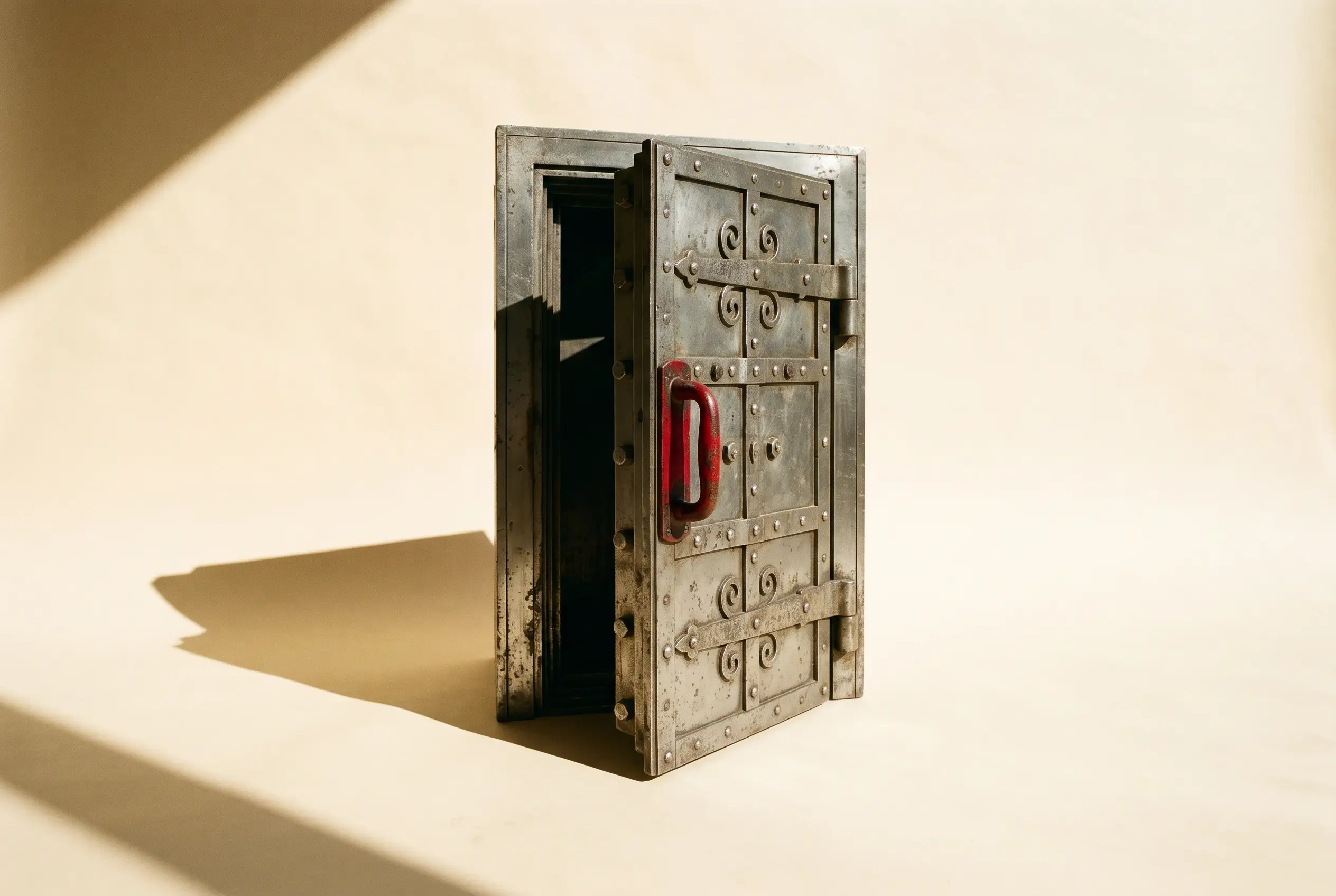
Transparency is not a confession of weakness. It is the most disciplined act of leadership a person can perform.
The leaders worth trusting are rarely the ones with the smoothest delivery. They are the ones who tell the truth before anyone has to ask for it. Every organization has a version of the leader who manages perception instead of managing reality — and every organization eventually pays for that choice, usually at the worst possible moment.
Opacity is not strategy. It is fear wearing a blazer.
Secrecy has been confused with strength for so long that transparency now feels radical. It shouldn't. Ruthless honesty about what a team can carry and what it cannot doesn't diminish authority — it sharpens it. People stop guessing. They start helping. The organization moves. Humans consistently perform better when they understand the actual terrain instead of a curated version of it.
The Numbers Never Lie, But Leaders Often Do
Numbers are cold. They do not negotiate. They have no feelings about the quarter. What they do is tell the truth relentlessly, until someone in the room decides to obscure them. Variance explanations get spun into mythology often enough that entire teams build plans on top of stories instead of facts — and fail in ways that were entirely preventable.
Money used to buy distinction. Now it buys delivery. The leaders who will define the next decade are not the ones protecting their own image. They are the ones protecting their people's ability to make informed decisions. That is impossible while hiding the numbers. It is impossible while hiding anything.
Transparency is not about broadcasting doubt. It is about refusing to let ego cost a team its clarity.
There is a difference between oversharing and being honest. Oversharing is performance. Honesty is discipline. Standing in front of a room and saying, "Here is what we know, here is what we do not know, and here is how we are thinking about the gap," is not exposing vulnerability. It is modeling rigor — showing a team exactly how a clear mind works under pressure. That is worth more than any polished narrative.
What Transparent Leadership Actually Requires
It requires tolerating discomfort without reaching for spin. That is harder than it sounds. The reflex to soften, to frame, to manage perception, is fast and seductive. Resisting it pays off: the truth, delivered with composure and context, builds more trust than any carefully engineered message ever will.
Transparent leadership produces the same outcomes consistently, across organizations and industries:
- Faster decisions, because people work from real information instead of assumptions built on incomplete signals.
- Stronger teams, because trust compounds when people feel treated as adults who can handle reality.
- Better accountability, because when expectations are stated plainly, there is nowhere to hide and no reason to hide.
- Deeper loyalty, because people remember who told them the truth when the truth was hard.
None of those outcomes belong to the leader who performed certainty they did not have. All of them belong to the leader who chose honesty as a professional standard, not a situational tactic.
The Courage It Actually Takes
In any conversation about high-stakes systems — new technology, new regulation, new risk nobody fully understands yet — the most dangerous thing in the room is false confidence. The most valuable thing is the person willing to say, "We do not have enough information yet, and here is what we are doing about that."
That sentence takes real courage. Not the theatrical kind.
The story a leader tells about their own strength matters less than the actions taken when the stakes get real. Nobody gets credit for the image. Credit goes to what actually got built, what actually got said, and whether people could trust that leader when it mattered.
Transparent leadership is not soft. It is surgical. It cuts through the noise, the politics, the performance, and the fear. It leaves behind something rare and durable: a team that knows exactly where it stands and chooses to stand there anyway.
That is not weakness. That is the whole point.