Comfort food has a reputation problem: too often it means heavy, sweet, and vaguely punishing by the next morning. Vietnamese caramelized pork breaks that pattern entirely.
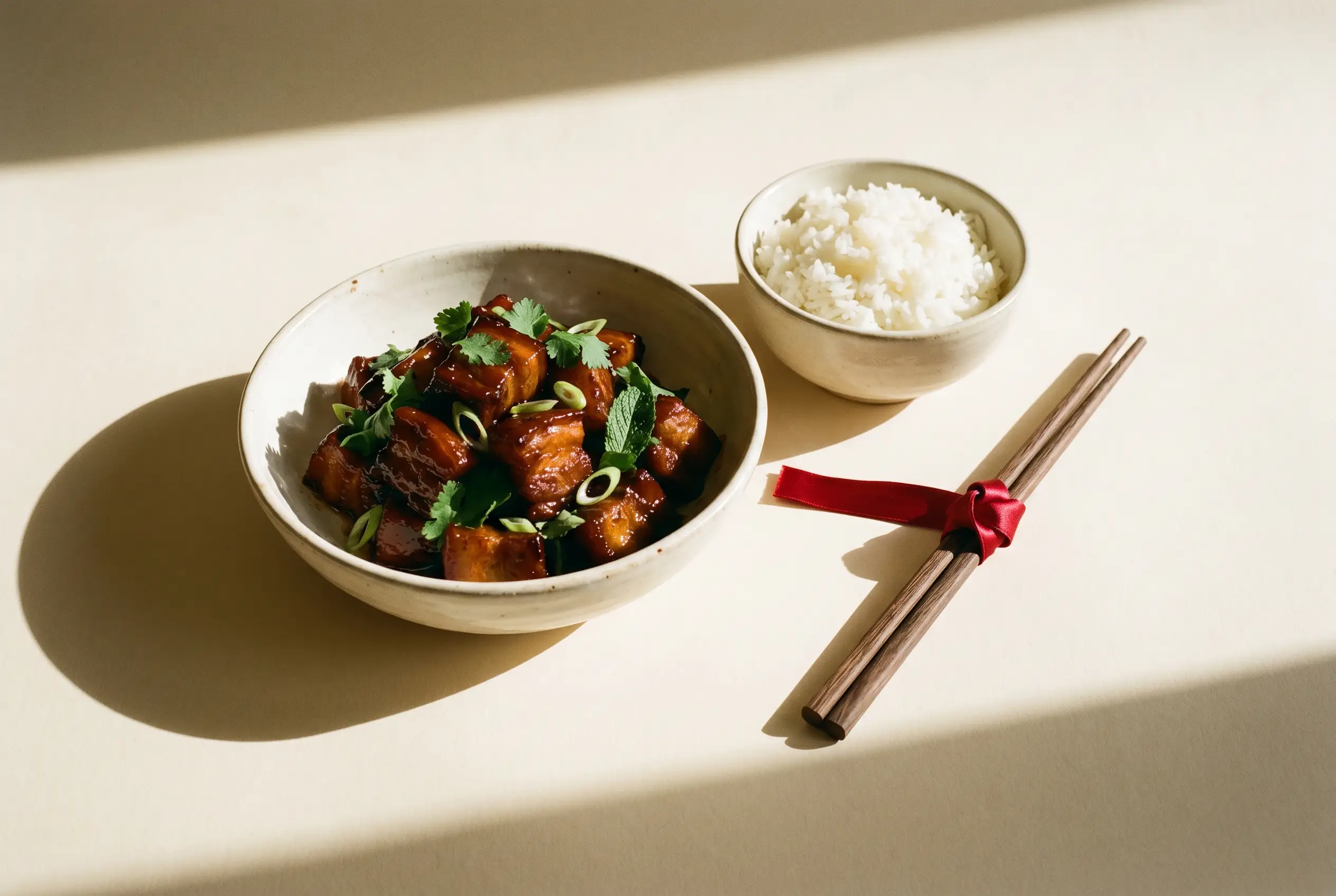
Thit kho — loosely translated, and the version here wanders from strict tradition the way most home cooking does — is built on lacquered pork belly, jasmine rice, and a scatter of fresh herbs that reads almost like an afterthought but is actually the whole point. It is rich without being punishing. Salty, a little sweet, faintly bitter at the edges from a dark caramel, and finished with enough acid and green freshness that the bowl never sits on the tongue the way a heavier braise does. That balance is the entire argument for making it.
The Discipline of the Dark Caramel
You cannot rush caramelized sugar, and the dish lives or dies on this one step. Granulated sugar melts and shifts from pale gold to amber to something just this side of burnt, and that final edge is everything. Pull the caramel too early and the finished sauce is sweet without depth. Let it go a few seconds too far and it turns bitter in a way no amount of fish sauce can rescue. The usable window is measured in seconds, not minutes, and the only way to learn it is by color, smell, and the way the smoke just starts to curl off the pan.
The caramel does not care how confident you feel. It only cares whether you are watching it at the exact moment it needs you to.
Once the sugar darkens to a deep amber, add fish sauce — it will hiss like it is offended — followed by pork belly cut into pieces thick enough to hold their shape through a long braise, along with sliced shallots, cracked black pepper, and a little water. Lower the heat immediately and let it go low and slow. The sauce reduces and thickens and clings to the meat as it cooks, the pork turns glossy, and the kitchen fills with something that smells like a much slower afternoon than the one you are actually having.
Why Richness Is Not the Same as Heaviness
Richness has depth and intention behind it. Heaviness is just excess that never bothered to edit itself. Caramelized pork earns its place in the rich category — the sauce is complex, the fat in the belly renders down into something silky rather than greasy — but served over jasmine rice with torn herbs and a squeeze of lime, the whole bowl lifts rather than settles. The herbs are not garnish here. They are structural. Pull them out and the dish reads as one long, heavy note instead of the layered thing it is supposed to be.
Building the bowl well matters as much as getting the braise right:
- Jasmine rice, cooked with slightly less water than the package suggests, so the grains stay distinct instead of clumping at the base of the bowl.
- Three or four pieces of pork, spooned over with enough sauce to pool slightly without flooding the rice.
- Fresh herbs — Thai basil, mint, cilantro if available — torn and placed rather than tossed, so they stay bright instead of wilting into the heat.
- A few thin slices of fresh chili and a half lime on the side, since the acid at the very end resets the palate and makes the first bite taste new again on the second and third.
Eat it slowly, ideally with the herbs added just before each bite rather than all at once, so they stay crisp through the whole bowl. The dish does not need a special occasion to justify the effort of that thirty-second caramel window — it just needs someone willing to stand at the stove and pay attention for the two minutes that actually matter.